#SPFBO4 Interview with Dave Woolliscroft, author of Kingshold
 25 August 2018
Filed under Book Reviews
Tags: #SPFBO 2018, Dave Woolliscroft, Interview, Kingshold


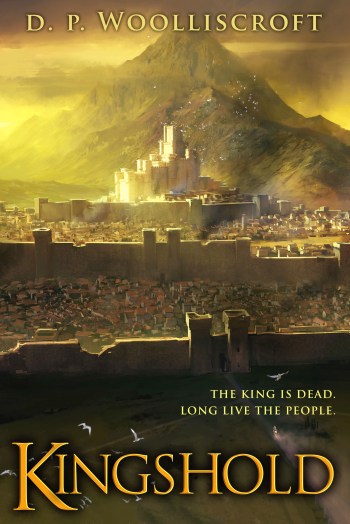
Today I’m pleased to welcome to my blog Dave Woolliscroft author of Kingshold (No.1 in the Wildfire Cycle)
Hi Dave, welcome to my blog and thank you so much for agreeing to take part in an interview
Firstly, Can you tell readers a little bit about yourself and your book??
The short answer, and the one that avoids regurgitating my bio from my website (dpwoolliscroft.com, go take a look), is that I’m a long time reader, first time writer, and I reached the point in my life where I finally thought, “sod it”. I better give writing a good go before I have (more) regrets as I get (even) older.
I’ve read a varied bunch, in genre and out, but it all started something like this. Tolkien to Eddings, to Weiss & Hickman (dragonlance chronicles), to Feist, to Williams, to Pratchett. I had a bit of a fantasy lull for a while in the late nineties, early 2000’s, but then Steven Erikson caught my attention and I became embroiled in the Malazan Books of the Fallen. That led to Glenn Cook and Joe Abercrombie and a great swathe of excellent authors who are producing today (don’t you think we are so lucky to have so many great books being published today?) (Why yes, yes I do)
Anyway, so thirty years of reading has created ideas and stuff sloshing around in my mind that in quiet moments will preoccupy me. Sir Terry Pratchett has been an enormous influence on me (I still go back and reread the City Watch novels), and so one day, at the beginning of 2017, I was reflecting on the absolute chaotic results that democracy delivered in 2016 in the UK, the US and around the world. It occurred to me that it was a shame that Terry never wrote anything about democracy in Discworld. I thought about how democracy almost sounds like a portmanteau of demon and crazy; and so that how’s the initial idea of tiny pink demonic pixies as the means of voting came about. And then I realized I would have to write it if I wanted to read this story.
Demon-crazy, eventually became Kingshold, and the story expanded to envelop the odd idea I’d been kicking around for nearly ten years.
Kingshold is supposed to feel comfortable to readers of fantasy in many ways: there is an ancient wizard; the city has a euro feel to it (though it’s not medieval). But then I wanted to flip some of the tropes on their head. The king and queen are killed in the opening chapter. The ancient wizard has had enough of the endless grind of protecting the kingdom and wants to retire (to somewhere warm probably). The new ruler isn’t going to be some lost child heir to the throne (no coming of age here), instead the ruler is going to be chosen by the people with money. And though I wanted it to feel epic, the entire story takes place over just thirty days and in the one city.
But Kingshold is also really a story about people believing in themselves and trying to live up to their potential. It’s about families, fathers in particular, and communities coming together. All wrapped up in a package with magic, monsters, pirates, demons, assassins and good old fashioned action!
I also think it’s worth mentioning that Kingshold works well as a stand alone read. It has five POV characters so the opening part of the book is laying some of the groundwork for both this story and the rest of the series, but by the time you hit the 40% mark it’s non stop to the end.
Oh, and it has some laughs in it. Because, if you can’t laugh when the world is going to hell in a hand basket when can you laugh?
You mention that your world has a European feel – does that come as a result of being well travelled as well as well read? Is there any place in particular where you feel you’ve drawn quite heavily upon the culture/characteristics of the place and can you tell me a little bit more about your own process in terms of world building?
I guess I’m fairly well traveled but there are so many places I would still love to go. When I still lived in England I really took advantage of how easy it was to get around to various places in Europe from London. And then, right before we moved to America we had a six week backpacking adventure through Eastern Europe: Croatia, Hungary, Czech Republic, Poland, Vienna and Berlin. We had such an amazing time; lots of very cool castles, museums and gorgeous scenery. So travels, and also history books, have definitely acted as a frame of reference as I started world building.
World building for me is a combination of “develop it as it was needed” or “dredge up something from the depths of my brain that I have been noodling on in quiet moments over many years”. As an example of the former, I think I wrote the first four chapters and I already knew that the story wouldn’t really leave Kingshold, but I didn’t know enough about the place. So I stopped writing and drew maps of the city, named the neighborhoods, considered its place in the world and its institutions. And after that I needed to have the larger world setting in place too. I had actually hand drawn the map of the Jeweled Continent about three years ago, just for fun, and so I claimed that for these books, further developing their people, religions and political institutions even though they don’t really appear in Kingshold. But to me it was really important to think broadly early, as I knew that Edland (of which Kingshold is the capital) was an island nation that punched above its weight, largely off the back of it’s ships, both merchant and navy. And that meant that Edland would be connected to its neighbors – globalization isn’t a new thing, it really started with the age of sail.
The evolution of a map


Not all of the locations have that European feel as we move through the series. In fact, one of the things that is of increasing importance is the Wild Continent that is mentioned in the book. You could think of it as the Americas when discovered by the Spanish, with its own very different range of cultures and civilizations.
I have quite a few things figured out when it comes to the world inside or outside the walls of Kingshold but I’ve definitely left myself room to discover new things too (which for me is huge fun). That’s one reason why my next book to be released is a collection of novelettes and shorter stories (called Tales of Kingshold, and officially book 1.5 of the series) that enables me to explore the backstories of some characters, introduce new characters and add more color to the world. Chronologically I think about a third of the stories in that book are from before the events of Kingshold, about a third are concurrent and then a third bridge books 1 and 2. I know this is an odd approach to publishing but it’s something I plan to continue for the rest of the series.
I’d like to know more about your characters. Did you have a particularly strong character in mind when you started writing, how many POVs does your book have, do you find it difficult to make them all individual and do you have a strong favourite.
Well, Kingshold has five POV characters. Maybe a little ambitious for a debut novel but I love to look at problems and situations from many angles. And I love to read a scene of a prominent character from a different perspective, I think that helps round out your view of them. I also really wanted to make this story diverse (in a good way) with prominent female characters and characters with different backgrounds, so multiple POV was the way for me to do that.
Hopefully, all of the POV characters feel distinct. They all have their own particular challenges and issues that they are dealing with as you meet them. We have some characters with a lack of confidence in themselves and their appreciation of their own self-worth. We have one character who is not living up to the potential that was identified early in his life. And there is definitely a common theme of characters who are struggling with the expectations of family and those who are close to them. Each of the characters have their own arcs and finish the book in quite a different place than they started, and it will be fun to see how the meat grinder of life treats them in the future.
And is it difficult?
Hell, yeah! Revisions, editors and beta readers really helped me with identifying where there were gaps that needed to be addressed to make the characters pop before I released Kingshold in to the world. One thing I was proud of from the feedback of my beta readers is that the most and least liked characters differed between them, and now too with actual reader reviews. I want readers to have the opportunity to latch on to the characters that most appeal to them.
I don’t think I can pick a favorite POV character. There’s a little bit of me in all of them. But of the supporting cast I really enjoyed writing Jyuth, the ancient wizard. He’s a cantankerous, foul-mouthed old guy who loves his food and the country that he helped found. You could think of him as a combination of the Danny Glover character from Lethal Weapon (“I’m too old for this s#!t” – one for the teenagers there) and Bayaz from the First Law trilogy. But unlike Bayaz, Jyuth is secretly a softy underneath, like a tough old teacher you might have had who wants you to learn for yourself but still very much cares.
Thanks for this. Finally, can I ask a few random questions unrelated to the book?
If you could go back in time to your younger self what advice would you impart? Embrace and be public with your inner geek! Don’t care what other people think. Be creative. Have confidence in yourself.
Can you tell readers 3 random snippets of information about yourself that isn’t available elsewhere on your social media?
- My three deceased heroes are Terry Pratchett, Brian Clough and John Peel. Which rather neatly covers my three passions of fantasy, football and music.
- I watched the sun rise from the top of my university dormitory on my 19th birthday. It was five floors up and required climbing up the outside of the building and through various other people’s dorm rooms to access parts of the roof. Yes, we had been out all night and I did find that I had suffered some injuries in the process after finally going to bed.
- I love pork products. Pork pie and sausage rolls are the foods I miss most about home.
If you could choose from any superpower what would you go for and why. Super speed. I could travel to anywhere in the world without having to get on a plane (and I’ve spent a lot of time waiting in airports). I would also be able to make more use of the time I carve out every day for writing.
If you could travel to a fictional world anywhere in the universe where would you go. Ankh Morpork. This city feels very real to me from Pratchett’s writing. It’s so colorful and diverse, and with a capacity for constant change. I’d try to wangle a meeting with Vetinari and see if Dibbler’s pies really are that bad.
Dave, thank you so much for taking part. I wish you all the best in the SPFBO.
FYI: Dave can be found at:
Goodread’s : author’s page
Website: http://dpwoolliscroft.com
Twitter: @dpwoolliscroft
#SPFBO 2018 : Guest Post – Phil Williams, Under Ordshaw
18 August 2018
Filed under Book Reviews
Tags: #SPFBO 2018, Guest post, Minotaurs, Origins, Phil Williams, Under Ordshaw
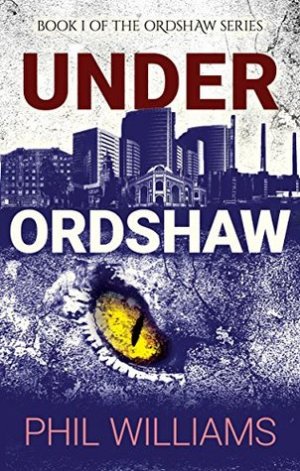
As you may be aware I’m taking part, as one of the judges, in the Self Published Fantasy Blog Off, details here. I’ve invited all the authors from my selected books to pay a visit to my blog and today I’m very pleased to welcome Phil Williams, the author of Under Ordshaw. Phil agreed to write a guest post about how the story came about involving a visit to New York, a few jaunts, getting lost, a labyrinthine hostel and possibly discovering a Minotaur under the city – well, just read the piece already.
The Origins of “Under Ordshaw”
Under Ordshaw takes readers to a UK city with more than a few dark secrets. It’s a city that’s at once familiar and unusual, and the core of a series intended to span dozens of books. It’s the result of years spent writing and rewriting interlinked stories, with a great deal of imagining what if…
It’s also the result of my own attempts to explore our world, and quite specifically the time we considered the possibility of a minotaur under New York.
Under Ordshaw has seen four major iterations – once as a novel, twice as a screenplay and finally the version you see today. Originally called Penguins and Seahorses, it had a plot inspired by my reading that penguins and seahorses are rare in nature as the male helps raise their offspring. The latest version has evolved from a simpler concept of an ordinary father facing the unnatural to protect his family, but the collision of ordinary and unnatural remains.
Recognising that collision was where the story really began.
At some point in life, I adopted a hobby of urban exploring. I placed myself in random places within cities and saw where it took me. What better way to come up with random and absurd stories than to visit places you don’t belong? I got a real taste at university, pottering around the graveyards and estates of Nottingham. I’ve fed it in every city I’ve been.
In the spirit of this mindset, in the Summer of 2006, myself, my brother and my closest friend took a holiday to New York City. We planned nothing, assuming that wandering the Five Boroughs with a travel card would take care of itself.
The holiday panned out in untypical ways, with highlights including narrowly avoiding a major crime scene in Queens and getting lost in the middle of Staten Island. As such explorative jaunts into the unknown stirred our collective imaginations, we happened upon the minotaur.
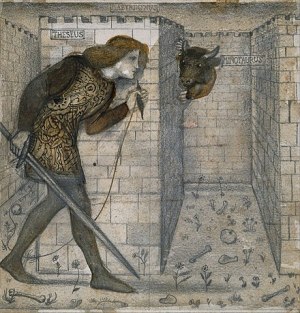 We were staying in a labyrinthine hostel with a kitchen in the basement. Down there, we heard great groans from the mechanics of the buildings. And we asked what if… In particular, what if the next time we heard that noise, someone ran past screaming, “Minotaur!”
In this city that had proved strange and threatening in our ignorance, such a thing seemed possible.
Over the fortnight that we viewed New York through the eyes of outsiders who knew anything was possible, the running joke revealed the minotaur’s lore and the characters that fought or defended it. There was the violent-minded homeless man, perpetually bent on a final showdown with his arch-nemesis: “Rattigan, we finish this now!” (His foe, naturally, the master of the ferocious rodents we’d encountered.) There was the sage Mantis, keeper of secrets. And there was the discovery of scratchitti – urban vandalism, or a way to communicate with the underworld?
This stimulation sowed the seeds that would become Under Ordshaw, after a decade of refining. Similar experiences in different cities added flesh to the tale; the minotaur and the underground fused in my mind, for instance, after watching weary people riding the Prague Metro.
The characters emerged from other moments of inspiration. Darren Barton belongs to the concept of penguins and seahorses; Rufaizu his carefree opposite. Cano Casaria was a necessarily creepy foil in my screenplay Brutal Tower (inspired by research into housing estates, which will live again in Ordshaw Book 5). The criminals of Ordshaw first found life in a school play.
Mid-2016, it clicked in my mind that a shared universe made it possible to connect the many disparate ideas of my contemporary fantasy work that I had never published. Ordshaw was the perfect place to realise it.
When I revisited these stories, and started drawing them together, Pax Kuranes emerged as the character necessary to endure this experience. An outsider to the madness she was about to encounter and, in many ways, an outsider within the city itself. Someone comfortably normal, but drawn to the stranger side of life, open to exploring alleyways at night.
And from this union came Under Ordshaw. A novel that lays the foundations for a lot of work to come, but a story that serves the sentiments of three ill-advised youths who holidayed in New York, intent on seeing it through a different lens.
***
Thank you Phil for writing this fantastic piece, I hope everyone enjoys it as much as I did – apart from the fact that I love discovering the inspiration behind the book – I think what really gave me a smile with this was the ‘what if’ – it’s a favourite phrase of my daughter and I suppose it’s a demonstration of curiosity and imagination at play together.
FYI : Phil can be found at:
www.phil-williams.co.uk Goodreads page
The link for the book is:
https://www.amazon.co.uk/dp/B07CXYSZVN/
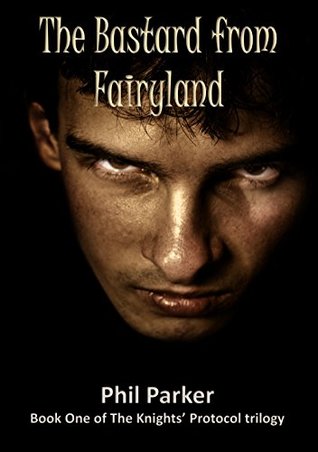
#SPFBO4 Interview with Phil Parker, author of The Knights’ Protocol Trilogy
4 August 2018
Filed under Book Reviews
Tags: #SPFBO 2018, Interview, Phil Parker, The Bastard from Fairyland, The Knight's Protocol Trilogy
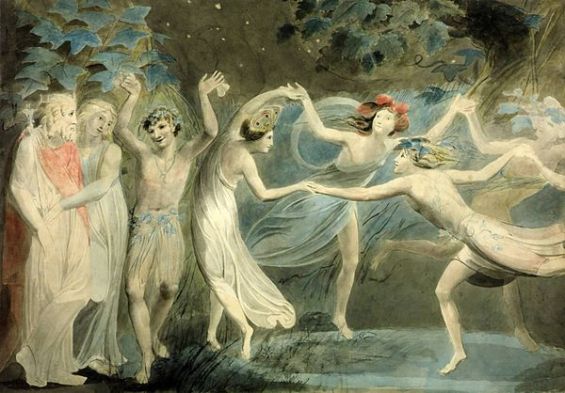
Oberon, Titania and Puck with Fairies Dancing by William Blake, c. 1786
Okay, the Self Published Fantasy Blog Off just started, my first books are all lined up and I have a number of interviews and guest posts scheduled from some of the authors of the books from my list. Excitement am I. So, my first interview :
Today, I’m really pleased to welcome Phil Parker (yes – P, Parker – who I so want to call Peter). Phil is the author of The Bastard from Fairyland (The Knights’ Protocol Trilogy #1)
Hi Phil, welcome and thanks for agreeing to take part in an interview. To begin with could you tell readers a little bit about yourself and also a quick summary of your book
I live in beautiful Worcestershire with my wife, daughter and our labrador, Maddie. I’ve been a teacher for most of my career but now I write full-time, from online learning resources, marketing copy as well as my books. When I taught, I wrote three non-fiction books for other teachers, I enjoyed doing that a lot. I wrote plays which I produced at my school and for a youth theatre I ran. Writing has always been a part of my life for as long as I can remember.
Writing The Knights’ Protocol trilogy has been a real labour of love. It’s been eight years since I seriously started work on it, when I stopped teaching. That story has had so many versions! Like a dog with a bone, I couldn’t leave it alone. But I could never get it to feel quite right. Then I did a three month writing course and my tutor gave me the confidence I needed to bring it all together. Getting it published felt marvellous, I never thought I’d ever get to that point!
The Knights’ Protocol is a dark fantasy. It’s the story of a cruel and ruthless Fae race declaring war on Humanity that’s on the edge of survival after ecological catastrophe has flooded the world. Caught in the middle is Robin Goodfellow, an exiled member of the Fae nobody likes. He’s a bitter, lonely ex-soldier with a psychotic alter-ego called Puck. He has no interest in either race killing each other until events drag him into the conflict and he becomes a crucial factor in its resolution.
I’ve been enjoying SFF stories since I was a child and I’m sure you have too. It would be great to hear what books you love to read – I’m always fascinated to know what books authors love and if they feel like their reading experiences have had an influence on their writing. I guess, like most readers, I’m nosey (or curious) and I’m also always on the look out for recommendations.
Yeah, I have always loved reading. I loved how I could lose myself in a story as a kid. I’m going to give my age away now when I tell you that I first got into fantasy by reading Astounding Stories comics in the 1960s. They evolved into superhero comics which a bunch of my friends collected and swapped. True nerdy behaviour! I was a massive fanboy of The Avengers, X-Men and Fantastic Four. I could relate to Spiderman too, not just because he was a nerdy kid as well but also because his name was P. Parker – like mine! I was so proud of that!! (Years later, kids at my school nicknamed me Spiderman!)
Who to recommend? Oh wow! The list is endless. If I limit it to the authors who’ve influenced my own writing the most? Top of that list is Richard Morgan, I loved Altered Carbon (the TV show too) and his Land Fit For Heroes trilogy. It was my route into all things Grimdark so then I discovered Joe Abercrombie, Mark Lawrence and at the moment I’m fascinated by the Grimdark-with-Heart stories of Ed McDonald.
You mentioned your love of Celtic Mythology and Arthurian legend. Do these play a leading role in your book? How did you go about incorporating them, did you have a plot and then work those elements in or did you know from the beginning that they would play a role and they were actually a part of the story’s development?
Oh I wish you hadn’t asked me that Lynn! You’re going to get a lecture on my 10 year journey of research if I’m not careful.
OK, the quick summary version. About 12 years ago I read Faerie Tale by Raymond E Feist and I got fascinated by how he wove his story around myths and made them sound like they could be based on real history. I decided to do the same thing. I became fascinated by the Green Man legend and how it stretched around the world. That became the central focus of my research but I went off in so many different directions, I was like a firework! My research took me into Celtic mythology and from there to Arthurian legend, which landed me in Glastonbury and that’s when the Knights’ Trilogy really took shape. My first novel in it, The Bastard from Fairyland, takes place in and around this mystical town. When the Somerset Levels were badly flooded in 2014 that gave me the setting of a world suffering from the impact of global warming. I think the myths and the plot met and shook hands, that’s the only way I can describe how the books formed.
Let’s talk about research. To what lengths would you say you’re prepared to go to? Are you obsessive about the detail? Have you found that when researching some of your discoveries have resulted in changes to your story? – that leads me on to a slightly different question which is when you started your series – did you have a full plan, did you know the beginning and the end or was it a very fluid process that changed as you went along?
Dyrk Ashton (he of the wonderful Paternus stories) and I agree that we’re obsessive about research. We get so carried away with it, the difficulty comes in deciding what NOT to include! But to answer your question, I certainly didn’t plan anything. I can’t. This was a discussion Dave Woolliscroft (he’s written the brilliant Kingshold) and I had recently. He plans really carefully. I think it’s my drama training that means I write with my characters in my head. Once I’d found Robin, the books wrote themselves. It just took ages to find him. So I had a fair idea of how The Bastard from Fairyland would end but that vision got significantly dimmer as the trilogy progressed! It was an organic process. As each event took place it left me thinking how Robin would react. By the time I’d finished I knew that guy inside and out. He’s had a very positive effect on the people who’ve read all three books – they’ve all said how they hope it’s not the last we’ll hear of my dark warrior. I hadn’t thought about doing anything else but, I’ve got to say now, I miss him. That probably makes me sound very weird.
(Nope – it, doesn’t sound weird at all – of course you’re going to miss a character who has been in your headspace for such a long time).
A Midsummer Night’s Dream is the only Shakespeare that I’ve read, although I’ve watched a number of adaptations. I love the idea of the fae and particularly their meddling in mortal lives. Does your book use any of the characters from A Midsummer Night’s Dream? Do you have any particular favourites?
It’s my favourite Shakespeare play, can’t understand why I never produced it at school! I’ve seen it performed more than any other too. I got fascinated by the Elizabethan perspective of the Fae. They believed in their existence completely. They were seen as cruel, ruthless, a race who hated human beings and did everything they could to make their lives a misery. It’s from this time that the idea of the Fae being sterile comes, which was why they were supposed to steal human babies and replace them with Changelings. This issue is a huge factor in my novels. If you’ve ever made a daisy chain, you might not know they were originally placed around sleeping babies to stop fairies from stealing them, fairies hate daisies!
It was the Victorians who made us think fairies were ‘painty-winged’ creatures that looked like flowers – artists like Arthur Rackham. The Victorian writer Rudyard Kipling wrote Puck of Pook Hill – it’s a lovely child’s fantasy story of two kids who meet Robin Goodfellow. That got me interested in the character and reminded me of his cruel behaviour in Dream. The conflict in the play describes how the human world is turned upside down environmentally by Oberon and Titania and their two Courts. Then there was one more factor – but I won’t mention that! It is the denouement of The Bastard from Fairyland – so no spoilers!
In terms of self publishing, can you share with us a little bit about the process that led you to choose this path. It would be great to hear about your experience and what were the highs and the lows.
I’ve tried the conventional route. There are so few agents who appear really interested in fantasy so finding representation hasn’t been easy. Those who did show interest got bogged down with the Grimdark features. My treatment of a minor character – a kid – right at the start got a thumbs down. I was told to avoid certain words and terms, one agent didn’t like swear words, another said it was ‘too English’ so it wouldn’t work with the US market. That last one I’ve disproved by my sales already. So I decided to do my own thing with Amazon. It was so easy it astonished me. KDP take you through the process step-by-step so you can’t go wrong. They provide loads of sales data for you to analyse too. Getting my first royalties payment was a big moment of satisfaction, after the 8 years of commitment to Robin and his world.
It takes time to get established, you have to be patient I’ve realised. Dyrk Ashton pointed that one out to me! But my reviews so far have all been 4 and 5 star (fingers crossed they continue that way!) and it’s brilliant to get people telling you how much they enjoyed the stories. Having done so much social media marketing in my career in the last 3 years, that’s helped me as a writer! And I’m looking forward to attending SFF events from now on too. All in all, I’m pleased I went down the Indie Writer route.
Being part of SPFBO has made that even better! I’m getting to meet (in reality and online) so many great people in the fantasy writing community.
What is your favourite/least favourite part of writing.
I love all aspects of writing. Even editing. I love the challenge it presents. I need to be creative and I find every aspect of what I’m doing (even the marketing) feeds that need. It had been a rather lonely business but now I spend a couple of hours a day on Twitter (sometimes when I should be doing other things) because I love catching up with other writers and bloggers all over the world. How good is it when you get to chat about the thing you love most – all the time eh?
(Yep, I can relate – that’s why so many of us readers blog after all)
How do you switch off – or do you not switch off at all?
Switch off?? What’s that? It’s a standing joke in my family that I never venture out of my study, unless it’s to take our dog for a walk. She pesters me until I give up the battle. But I get most of my best ideas when we’re tramping across fields anyway. I think Nature is a wonderful muse. But when I’m not writing (or thinking about it) then I watch TV and films. Always SFF stuff of course!
What’s on your radar next??
I’m working on my next novel. The Boy Who Wanted to be Normal. It’s a YA fantasy. I started work on it when I took a break from Robin’s adventures. I’ve had a couple of attempts at writing it, again without feeling like I’d nailed it. Now I’m there. At least with the first draft. It’s a story I’m enjoying now, since I separated from Robin! I’ve realised I’ve reverted back to my love of superhero stories. Some of my characters have certain abilities but they’ve suffered genetic modifications by an unscrupulous and powerful organisation, treated like lab animals. You can see the ethical implications I’m exploring. The biggest challenge is balancing that with my marketing work and the daytime job too. But I wouldn’t swap any of it. I’m enjoying myself far too much!
Phil, thank you so much for taking part and for sharing your thoughts – also thanks for bearing with me, you’re probably gathered I’m a bit of a newbie when it comes to interviews so I can ramble a little. I love your answers and particularly finding out random snippets of information – such as the daisy chain – I’d never heard of that before.
I’m really looking forward to reading your book and wish you all the best with the SPFBO.
Details of Phil’s book can be found here.
Let the #SPFBO 2018 begin : my process
Today sees the start of the fourth Self Published Fantasy Blog Off (#SPFBO). The competition involves 300 self published books, distributed between 10 blogs. Each blog will eventually choose 1 finalist leaving 10 finalists for the second phase. Each blog will then read and score the finalists which will hopefully result in one book with the highest score winning the competition. More details can be found here and if you scroll down you can see the list of books and how they’ve been distributed.
I’ve taken part as a judge in the past 3 competitions but this year I might shake my format up a little. Previously I’ve divided my books into six batches of 5 books and then chosen 1 book from each batch – this has then given me six semi finalists to choose between. In the past I’ve usually aimed to read at least 20% of the book in order to give the title a fair chance.
Now, I’m not going for a complete change because if it’s not broke then why fix it. This year is already slightly different. Phase 1 is now reduced from six months to five so I’ll be randomly choosing six books to check out each month. In previous years I’ve highlighted the books I’m due to read at the start of each month and provided the background and links, etc. This year, as I’ll be reading through six entries each month I’m going to divide that post into two – one at the beginning of the month with 3 books highlighted and one mid way with the other three (this is purely to reduce the size of the post to be honest so that all the books get a decent spot. At the end of each month I will post the results in terms of which books are going forward or not.
The main change is that I’m aiming to be a bit more flexible in terms of choosing my semi finalists. If out of my six books I really like two or more then I’m going to carry more than one forward. I’m also aiming to read at least 30% of each book or more than that if I feel compelled to do so. Ultimately, I’m probably making it harder to choose a finalist but we’ll see. I just want to keep my options open and not have too rigid a format. By the same token, I might not carry any books forward from a batch if I don’t feel they can compete with the ones that I’ve already carried forward (although I think that is highly unlikely to happen).
All the books that I read fully will receive a full review and the others will be given mini reviews (similar to the past three years).
If any of the authors from my list would like to pay a visit to my blog then you’re more than welcome either for an interview, a guest post or for a cover highlight or reveal. I’m open to suggestions. I already have a few interviews lined up which will be published in the next couple of weeks.
I’d like to wish all the authors from the competition the best of luck. This is tough, ‘there can be only one’ winner but regardless of whether your book wins or not I sincerely hope that you all take something positive away from the competition (this is an interesting article that you might want to check out on that very topic). There’s a great book community out there and hopefully this competition will provide an ideal place to meet and talk to other authors and bloggers and result in a fantastic feeling of not only belonging but being supported by that network.
A huge thanks to all the authors who have entered and good luck to everyone involved.
#SPFBO – Cover Competition
6 July 2018
Filed under Book Reviews
Tags: #SPFBO 2018, Cover Competition, Final Three Contenders
A part of the Self Published Fantasy Blog Off is the cover competition that is held before all the reading and judging commences. This is a lovely way to get the ball rolling and gives all the entrants another shot at having their book highlighted in a really positive way. All ten judges pick three favourite covers from their own batch of books. There is then a vote to decide the favourite out of the 30 covers submitted.
I can’t tell you how difficult this was. I definitely wanted more than three. Now, being a sole blogger I can’t really vote on the books so I just have to go with my gut feeling. No amount of humming and ahhing has helped. I’ve been backwards and forwards deliberating and I can say for the record that you people (my authors) have made this almost impossible. At the end of the day there are some quality covers – check them out here. I eventually narrowed it down to about eight contenders but the three I’m entering into the competition are as follows:
My 3 cover contenders:


Sorry to all the others, I realise it’s not much consolation but I liked so many of your covers and the standard this year is fantastic. To check out the other entries put forward this year look here.


 Books and travelling with Lynn