Interview with Cheryl Mahoney, author of The People The Fairies Forgot
 30 October 2015
Filed under Book Reviews
Tags: Author Interview, Cheryl Mahoney, The People the Fairies Forgot, The Storyteller and Her Sisters, The Wanderers

Today I’m pleased to invite Cheryl Mahoney onto my blog. Cheryl has just released her third book: The People The Fairies Forgot and we’re here today to explore a little bit about the story, discuss what next and chat about a few other points of interest. I’m currently taking part in an event called the SPFBO (Self Published Fantasy Blog Off) and so I also took the opportunity to chat to Cheryl about the pitfalls or otherwise of self-publishing. Without further ado.
Hi Cheryl
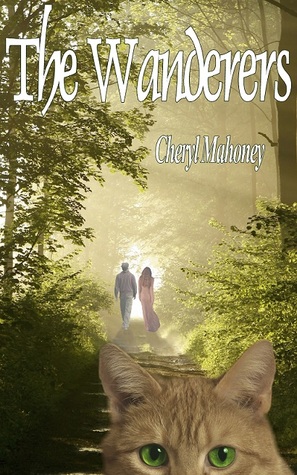
The Wanderers is Cheryl’s first book
Thanks for stopping by my blog and taking the time to answer my questions:
LB: You’re about to publish your third book – which is an excellent achievement. I wonder if you could give a few pointers to other hopefuls out there wanting to go down the route of self-publishing. Any pitfalls to avoid/inspiration, etc?
CM: I think the best and worst thing about self-publishing is that you do everything yourself. That means that besides writing the book, you also set up the text formatting (from the copyright page to the typefont to the about the author page at the end), create the cover, write the back cover blurb, format the ebook, and handle the marketing. There are options to hire people to do most of that, but that’s a choice about whether you want to spend the money—and ultimately, you’re still the one making decisions on all these things.
Personally, I like the control. I don’t have to worry about a publisher creating a cover that totally misrepresents my novel. On the other hand, I have to decide what cover would look good, and make it happen. And authors have to decide for themselves what their comfort level is on trying to tackle some of these things, which can require quite different skills than writing the novel itself (although there are a lot of resources online to get help on how to handle all these). I think it’s important for authors to know that all the other pieces really are work—but can be very satisfying too.
The best thing about self-publishing is that I can get my stories out to people who enjoy reading them—and without needing anyone’s “permission” to do it!
LW: Great characterisation is something I love in a story. How easy do you find it to create your characters – do you take people from your every day existence and use their mannerisms? And is it easy to create a character from the opposite sex? Is this something that you have to give a lot of consideration to or not?
CM: Characters are usually my favorite part of stories too. I tend to come up with story ideas along the lines of, what if this kind of person was in this situation? Usually I have a rough idea of who I want a character to be when I start writing, and then they reveal themselves to me more and more as I write. Especially when I’ve been working with a character for a long time, it doesn’t feel like I’m inventing things about them—more like I’m discovering something new that was always true.
I wish I was more observant of people in real life, their mannerisms and so on, because I’m sure it would be helpful! As it is, things like physical tics or movements to express emotion are things I have to very consciously layer into the story. I’ve never knowingly based any character on someone I really know, even loosely or in part. Except for myself! Elements of myself (more thoughts and emotions than physical things) certainly enter into many of my characters.
I actually think it can be a bit of a pitfall to think too much about writing a character of a certain demographic. If you asked me to write, say, a typical thirty year old man, I’d find that quite challenging and would undoubtedly overthink it, only to wind up with a stereotype! I try to always look at my characters as individuals—not “how would a man react to this?” but rather “how would Anthony or Jack or Tarry react to this?” I’m definitely not a male extroverted millennium-old fairy myself, but I still feel like I know how to write Tarry!
LB: I’d love for you to tell us a bit about your working day. Do you actually physically go out to write and set up somewhere remote from your home so it feels like you’re out at work? Do you make copious notes and detailed histories for your people and places? Do you write certain chapters out of sync just because they pop into your head?
CM: I do like to go out to a local café and write when I have the time, either by myself or with some writing friends. But the truth is, I have a full-time job and (probably too many) other commitments, so I’ve had to become good at writing in spare scraps of time—15 minutes on my lunch hour, 30 minutes in the evening after work. The most important writing habit I have is to write every day. I actually put X’s on a calendar, and I haven’t missed a day since April of 2013. I don’t always write a lot, but I always touch in with my fiction writing somehow. The time adds up that way, and it’s incredibly important to simply have the mindset that writing is always part of my day. That wouldn’t work for everyone, but it’s been a huge help to me.
I’m not a big note-maker or outliner, usually. I do always have a Notes document for each of my novels, to put reminders to myself about things I want to do or aspects I know I’ll need to come back and revise. It’s also a good place to dump sections that I end up cutting, because I’m compulsively unable to delete writing!
I usually write scenes in order, in part because I need to figure out details of the plot and character development as I move forward. I think of it like watching a carpet unroll—I can only see a certain distance ahead, and I have to keep writing forward to unroll and see more. I did actually write some chapters of The Wanderers out of order (a little easier because each chapter is somewhat more self-contained than my other novels tend to be), though within each chapter I was writing in order. I’m also working on a very long historical fiction novel that has been written in bits and pieces all over the place. So, with exceptions, I write scenes in order!
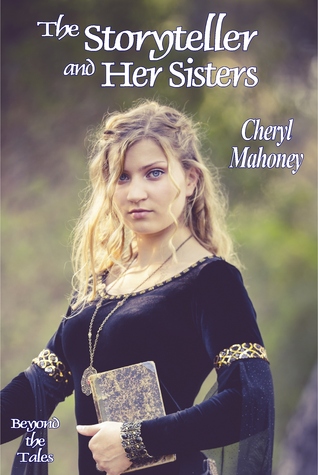 LB: Can you tell us a little bit of what to expect from your third novel – have you incorporated any people or places from the first two and overall what would you say is the main thrust of the story.
CM: This is my third book in the same series, and like the first two it’s written to be read separately. The first two were true companion books, with some overlapping plot points and scenes. This one is more independent, though readers of the first two will recognize a few characters. Tarry, my unusual fairy and narrator of this story, appeared as a supporting character in The Wanderers, and alert readers will spot a few references to his friend a wandering adventurer in this book. An inn appears at the end of The Storyteller and Her Sisters, and that inn and the people who work there have much more significant roles here. And finally, Marjoram, my Good Fairy, was a thorn in the sides of the heroes of the last two books, and is up to even more trouble—er, good deed doing, in this book!
The People the Fairies Forget retells three familiar fairy tales, but takes a new angle by focusing on people who are usually very minor characters. Marj considers them pretty minor too, and Tarry’s efforts to defend them from the fallout of her spells brings the two of them into conflict. I really wanted to explore the idea that everyone has a story, even the people the stories aren’t usually about.
LB: For the people out there reading this interview right now who would you say your books will appeal to the most?
CM: I’m fortunate to have had positive feedback from very diverse readers! I like to think my books have cross-age appeal—nothing inappropriate or too challenging for readers as young as twelve, but it’s not too simplistic for older readers to enjoy. It will help if you like fairy tales—especially if you’ve wondered at some of their stranger aspects…
LB: And, jumping totally ahead of myself ‘where next’? Do you have a whole series of books that draw inspiration from 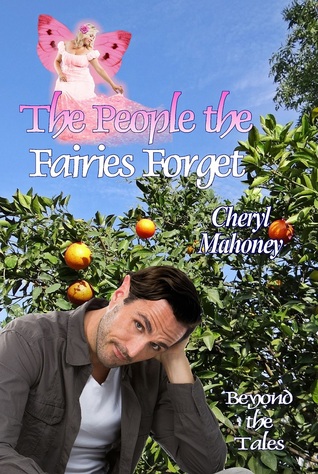 the fairytale world or do you have different plans?
I have at least one more book planned in this series. I have a draft already written of a (somewhat loose) prequel to my second book, The Storyteller and Her Sisters. If all goes well in the next year, I’ll be releasing The Lioness and the Spellspinners around this time in 2016!
More immediately, I’m jumping into NaNoWriMo this November, with plans for a novel in an entirely new direction. I haven’t started yet so I don’t want to say too much—but I expect it to be a sci fi story involving multiple universes. It may be more serious than my other books, though I expect it to still be YA-appropriate.
Right now I’m excited to try something new after four books in the same series, but I may return to my Beyond the Tales world again too. The fun thing about this series is that every book focuses on new main characters, so the possibilities to keep building out are pretty endless! And I don’t rule out the possibility of going back to some of my main characters again. I like to end books just as the heroes are setting off for new adventures, so it keeps the door open to visit again.
Cheryl, thank you so much for stopping by, I really appreciate your honesty and it was lovely to have you visit.
You can find the descriptions for all three of Cheryl’s novels by clicking on the links below:
The Wanderers, The Storyteller and Her Sisters, The People the Fairies Forgot
Author interview: TB Markinson, A Woman Lost..
2 September 2013
Filed under Book Reviews
Tags: A Woman Lost, Author Interview, TB Markinson
Today I’m fortunate enough to have a guest interview!! TB Markinson whose recent debut novel ‘A Woman Lost’ has been receiving great reviews (check them out here and here and pick up a copy here!) Now, admittedly, A Woman Lost isn’t a book I would normally pick up and, considering how much fantasy and paranormal stories I usually read, I’d say this is definitely outside my comfort zone. So, I was very pleasantly surprised with this debut. TBM has a great writing voice and manages to pull you into this novel with ease. A book about family, friendships and relationships, tough choices and becoming comfortable in your own skin – before it’s too late.
So, welcome to my blog and thanks for taking part and moving swiftly on….
1. Have you always wanted to write and, if so, do you have lots of stories that you’ve already come up with or was this your first?
Ever since the 6th grade I’ve wanted to be a writer. I had a student teacher who praised one of my stories and mentioned that I should be a writer when I grew up. Before I hadn’t given much thought about what I wanted to be. But as soon as she said it, I knew that was it. She instilled the idea and that desire never went away.
A Woman Lost is the first novel that I completed, however, it wasn’t the first novel that I started. Back when I was 18 I started writing a novel. But then life happened and I put it in a drawer for years. Then I began another novel. And another. Stories are always popping into my head and I wish I had countless hours to sit down and write them. But I’m a writer so I’m really good at procrastinating and forgetting simple words making it quite difficult to meet deadlines. These past two years I’ve been working on that. The second novel is almost complete. I have a draft for the third and I’ve started the fourth. Now I just need to work on my focus.
2. Writing a book must be like a dream come true. Now that you’ve been published how does the dream and the reality compare?
That is an interesting question. It’s fantastic knowing that I finally did it. I talked about publishing for so long and now I can say yes I did publish a novel. But since hitting the publish button I’ve been so busy promoting it I haven’t really had time to enjoy it. No matter what, there’s always something more that needs doing. It’s exciting, frustrating, daunting, and tiring. Yet I wouldn’t have it any other way. In my experience, work is work. And until now I haven’t had many jobs that I liked or was that committed to. Writing and publishing are not easy, but at least I love what I do now. That makes it a whole lot easier when my alarm goes off each morning. And working from home helps. I love wearing my pajamas to work every day. Companies should allow that.
3. Did you have a plan for your story or did it evolve as you went along?
I had an idea about the story and I sorta knew where it would go. Surprisingly halfway through I learned that my characters had other ideas in mind and they took it in a new direction. I don’t like to plot out a novel to the last detail since the story always takes over and throws me curveballs. For me, I need to get to know my characters before deciding what will happen and that usually happens during the writing process.
And now, incredibly important question alert,
4. Can you give us a sneaky peak at what to expect from your next project?
The next novel is called—wait I almost told you. You are sneaky! It’s not a romance novel like A Woman Lost, but more of a coming of age novel with a few twists and turns. The main character, Paige, is a young woman who has a lot on her plate. She’s a lesbian but has to hide that fact from her parents and roommates in college. Her best friend died a few years ago and Paige has never recovered from that loss. There are protests for and against gay rights on her college campus and there is a lot of tension in the air and the possibility of violence. And one more thing, Paige tried to kill herself right before her high school graduation. But she didn’t do it because she’s depressed. So the big question is why did Paige slit her wrists?
Quick fire questions:
1. If you could be gifted any superpower what would it be and why?
I would like super dooper vision. I’ve been wearing contacts since the 3rd grade. Without my contacts I can’t see anything. I’ve been known to walk into walls. It would be nice to be able to see.
2. If you were given the chance to be an extra on any movie (already made or otherwise) what would you pick?
The Philadelphia Story. I’m a huge fan of Cary Grant, Katharine Hepburn, and Jimmy Stewart.
3. Who is your current favourite fictional character
I adore Doc from Cannery Row
4. Name one book that you can and have read over and over
The Great Gatsby. I have read that book at least five times. I’m sure I’ll read it many more.
5. What is your current read
Mansfield Park by Jane Austen
6. Next travel destination
New York City and Reykjavík, Iceland. We’ll be in NY for US Open and then on our way back to London, we are stopping in Reykjavík for a few days.
7. What 3 things would you take with you on a desert island
My partner, a never-ending supply of beer, and a Kindle with an ever-lasting battery (you didn’t say I couldn’t cheat on this one)
8. Star Wars or Lord of the Rings (you have to choose one, and only one, otherwise you will self destruct! (only kidding about that bit! but really, no cheating)
Lord of the Rings
9. Dogs or Cats – I know it’s a toughie but you have to choose!
Sorry, I played nice with the previous question. I just can’t answer this one. Miles my dog and Atticus my cat are watching me type this. My life will be hell if I answer this question.
10. Authors with the biggest influence on your writing.
Jane Austen, Ernest Hemingway, John Steinbeck, F. Scott Fitzgerald, Dorothy Parker, Mark Twain, Charles Dickens, George Eliot, J. D. Salinger, Toni Morrison, and Thomas Hardy were the first names that popped into my head. Most recently, Stephen King has been a big influence.
Author Interview: Mike Allen, Black Fire Concerto
5 August 2013
Filed under Book Reviews
Tags: Author Interview, Clockwork Phoenix, Mike Allen, The Black Fire Concerto
‘A couple of weeks ago I was lucky enough to receive a copy of The Black Fire Concerto from it’s author Mike Allen. My review is here and if you like dark fantasy and horror this could be for you. Cheekily I chucked out there that the author might like to let me have an interview and surprisingly (for me more than anyone) he agreed! Well, there’s a first (and probably last) time for everything. More information about Mike here and here.
Hi Mike. Welcome to my blog and thanks for agreeing to take part.
Thank you for asking me!
One of the most common pieces of advice for would-be writers is to write from experience. Given that you write about horror/fantasy just how realistic is this advice?
You know, there is something to it, but I would rephrase this as “Let your experiences fuel what you write.” For every claim that you have to live a few decades of life before you can write well, I can show you a writer half my age who has crafted beauty and terror out of what they know. That said, I do think that my background as a crime reporter allows me to add some additional weight to the happenings whenever I write horror in a modern setting. But even once you get into realms of pure imagination, your experiences still help. I have never played a harp, been a prisoner of a cannibal cult or ridden a horse made of fire and straw, but I can think about what experiences I’ve had that might approach those things, and extrapolate.
I’m always interested in the magic contained in any fantasy and the ways in which authors come up with new ways to make it ‘work’. How did you come up with the idea for the magic in the story and the use of music to act as a means of ‘performing’ magic.
The magic in The Black Fire Concerto grew more from gut instinct than careful planning, something that’s true of much of my writing of late. It’s rooted in the decision to make Olyssa, my main heroine, a musician. I’m not able to pinpoint what drove that inspiration – I can only tell you that originally she was a gunslinger, and the idea that she was also a musician arrived as part and parcel of her first adventure with Erzelle. My mind sometimes works like that, provides me with characters, settings and plot in a near-complete package. It made sense to me in a poetic way that creating magic with musical notes could work like weaving, if you assume the power of each note builds and lingers and creates something durable even after the sound has changed or faded, and the more complicated the weave the more elaborate and powerful the spell. That principle guided how the magic developed through the rest of the novel.
I was intrigued about the characters. Are any of these based on characters you know? Do you have a favourite and how did you reach the decision to make Erzelle such a young protagonist?
Olyssa is my personal favorite – she is the novel’s reason for being. She actually is inspired by a friend of mine, a fantastic author and editor who takes absolutely no guff from anyone. (In Olyssa, I’ve exaggerated that trait to lethal extremes, and though at times her actions skirt some uncomfortable moral territory, they also make her really fun to write.) I’ve gotten a lot of great reader feedback about my fox-man, Reneer, who is also fun to write, but who isn’t based on anyone in particular, other than maybe the persona I would adopt if I were running a trickster in a role-play game. The arc of the novel belongs to Erzelle, and her odyssey was challenging and rewarding to craft – though just as Olyssa turned out to be a musician with no premeditation on my part, I never pondered what age Erzelle should be. In my mind she was always 12 years old when the story started.
You’ve written quite a lot of short stories. Did you enjoy the experience of writing a more in-depth piece? How did the experience compare to your previous writing?
Technically The Black Fire Concerto is my second novel, but it’s the first to see print. The first one took me five years to write, while The Black Fire Concerto was written and revised in a period of about five (non-consecutive) months. It’s hard to truly compare between stories, because for me, each story wants to be written in its own way. I have short stories published that took me longer to write than Black Fire Concerto did. Technically this novel was a commissioned piece, which made all the circumstances unique. What’s definitely true is that when I wrote Black Fire Concerto, it was the first time I ever took a “glued to the keyboard, damn the torpedoes, full speed ahead, no stops for any reason” approach to a first draft of that length. (By contrast, I usually draft my short stories and poems longhand in a steno pad before typing them into a computer file.) It was grueling and when I finished I didn’t even fully comprehend what I had written – I could only hope that my instincts for how to tell a story guided me true. Here I have to give a universe of credit to my editor, Claire Cooney, who was able to look over 200-some pages of raw dreaming and say, you steered in the right direction the whole time, but these are all the places where you left the path. I had terrific beta readers, too.
Hopefully there will be a follow up to the Black Fire Concerto, can you give us any idea where this might lead in the future??
Oh, I have plenty of ideas. There’s a huge, drastically altered world to explore, some major unresolved story threads to pick up, new characters to meet. There’s no publishing deal lined up for a sequel – at least not yet – so I’m reluctant to spill too much. Someday soon we’ll have to go back to Fabelford, obviously. And despite Olyssa’s best efforts there’s still oodles of sorcerer enclaves out there in the wilderness, preying on innocents. I’ve only hinted at what the Storms are, what they can do, what it might take to stop them. But the scene etched most vividly in my mind at the moment involves Olyssa, Reneer, and a simple folk dance.
Quick fire questions:
• Favourite author: Sorry, this has changed over the years. Right now I don’t have one favorite. See below.
• Most influential author: Over the years: Edgar Allan Poe, J.R.R. Tolkien, H.P. Lovecraft, Susan Cooper, Ursula K. Le Guin, Clive Barker, Harlan Ellison, Laird Barron. And there’s so many more.
• Last book that you read: Jagannath: Stories by Karin Tidbeck
• Next book you’re gagging to read: I just ordered Joe Hill’s NOS4a2, Neil Gaiman’s The Ocean at the End of the Lane, R.S. Belcher’s The Six Gun Tarot.
• Last film that you watched (and did you enjoy it): The Unborn, a dybbuk possession film. Definitely not destined to be a classic, but entertaining in a completely brainless way.
• Next ‘must see’ film for you: Nothing coming up is a gotta-see movie for me, though I’ll definitely catch the next Hobbit. And Terry Gilliam’s next movie, The Zero Theorem.
• Who you would interview if you could choose anybody (fictional included): This is funny, as I interview people for a living (my most recent big name interview was with Yoko Ono.) My dream interview would be with Stanley Kubrick. If you stick to living people, Gilliam would do.
• What would be your first question to the above character: Tell me about the movies you want to make but haven’t yet.
• If you could go anyway in the world, universe or fictional world where would it be: An alternate version of Rome where I could study the Sistine Chapel ceiling for as long as I wanted.
And, a quote for your edification. This sentence popped up fairly early in the story and frankly I read it and then went back and read it again! Check it out:
‘In keeping with tradition, the once-human creature intended for the main course had been prepared so that its head remained uncooked. Its throat and tongue removed, it grimaced as the Chef approached.’
I’m glad you like this … morsel. (wicked grin)
Check out The Black Fire Concerto – you know you want to.


 Books and travelling with Lynn