Guest post: Henry L Herz
 6 October 2016
Filed under Book Reviews
Tags: Beyond the Pale, Henry Herz, Little Red Cuttlefish, Mabel and the Queen of Dreams, Monster Goose Nursery Rhymes, When you Give an Imp a Penny

Today I have a guest post from Henry L Herz. If you’re new to this blog then Henry has been a visitor to my book space on a number of occasions and a very enjoyable guest he is! With a store of books under his belt (check them out on Goodreads) Henry’s latest release is another beautifully illustrated children’s book that brings an interesting spin to the Little Red Riding Hood tale. Today Henry is talking about encouraging young readers to read both fiction and non-fiction (and also to eat broccoli and sprouts (okay sprouts is probably going too far!)) In my book anything that encourages young children to pick up books is greatly welcome:
Hi Henry,
Using Fiction to Interest Young Readers in Non-Fiction
I think it’s fair to say that parents want their kids to develop both the right-brain creativity stoked by reading fiction, AND the left-brain analytical capacity encouraged from reading non-fiction. Both help round out young minds. Both improve school grades and SAT scores. Both are useful life skills.
Sadly, many young readers view only fiction as fun reading; looking down their cute noses at “boring” non-fiction. This makes fiction the chocolate pudding of the literary banquet table. History, math, and science are relegated to the role of lima beans, broccoli, and Brussels sprouts. Boy are they steamed!
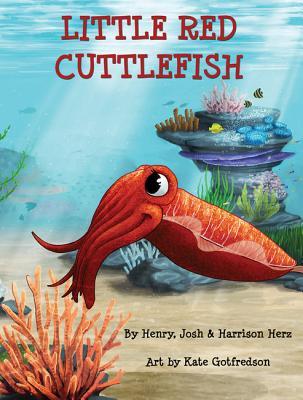
Now, I love fiction. After all, I write fiction picture books – like the fractured fairy tale, Little Red Cuttlefish recently released by Pelican Publishing. And I moderate fantasy literature panels at San Diego Comic-Con. That said, I’ve also been long fascinated by history, math, and science.
So, how do we get kids to use both sides of their brains and eat their literary vegetables? Well, as a parent, I’m not embarrassed to admit that I’ve resorted to melting cheese on vegetables so my co-author sons eat what’s good for them. And why not use the same technique with my writing?
Little Red Cuttlefish is a good example of this approach. The story is an aquatic retelling of the classic fairy tale. In the original, Little Red Riding Hood is swallowed whole by the wolf – not a very savory outcome (for the girl, anyway). In Little Red Cuttlefish, the plucky cephalopod protagonist uses her wits and natural defense mechanisms to thwart a hungry tiger shark.
Aside from a more positive message (they were called the Brothers Grimm, after all), the aquatic version is intended to spark young readers’ interest in learning about sea creatures, zoology, and science in general. Toward that end, the story showcases the superhero-like abilities of cuttlefish, and an author’s note serves up fascinating facts about cuttlefish and tiger sharks, an excerpt of which is below.
Cuttlefish aren’t fish at all. They are members of a class of animals that includes squids, octopuses, and nautiluses. They have a porous shell inside their bodies, called a cuttlebone, which is used to control their buoyancy.
Male cuttlefish have eight arms and two tentacles. Female cuttlefish have only six arms and two tentacles. The arms and tentacles have suckers for grabbing prey. And if that isn’t strange enough, their blood is greenish blue.
Cuttlefish have an amazing ability to quickly change the color, pattern, and texture of their skin. Cuttlefish can use this camouflage to sneak up on their prey, which consists mostly of crabs and fish.
The cuttlefish’s ability to quickly change color also helps it avoid being hunted by sharks, dolphins, seals, and other predators. If camouflage doesn’t work and it is spotted by a predator, a cuttlefish can squirt out a cloud of brown ink to help it hide.
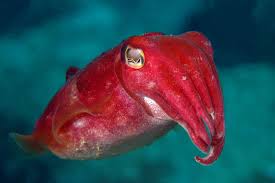
Now, what kid wouldn’t want the superpowers of changing color, squirting ink, and multiple sucker-covered arms? As if by magic, fiction can point young minds in the direction of non-fiction. “Why, yes, I WILL have some broccoli now.”
Thank you for visiting Henry: greatly appreciated as always 😀
For further reading check out this, this, this, this, or maybe even this.
Mabel and the Queen of Dreams by Henry L. Herz
11 September 2016
Filed under Book Reviews
Tags: Henry Herz, Mabel and the Queen of Dreams
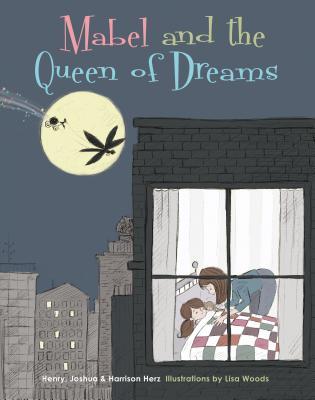
Mabel and the Queen of Dreams by Henry L Herz is a children’s book that will undoubtedly enchant and delight in equal measure. This is a lovely story about a young girl called Mabel. Mabel doesn’t want to go to sleep, there’s lots to see and do, she wants to run around and play. Of course, this is something that most parents are familiar with – the reluctant sleeper and more to the point the creative ways which children will imagine in order to defer going to bed! Abel is an expert in prevarication but her mum is an expert too – an expert story teller who has a wonderful story about the Fae Queen in her bedtime bag of tricks!
The Queen of Fairies is an expert in painting dreams. Riding in her horse chestnut carriage, pulled by a dragonfly with gossamer wings, she bestows beautiful dreams on those that she touches. Seriously, who wouldn’t want to go to sleep with the promise of such beautiful dreams to come.
Inspired by Shakespeare and illustrated by Lisa Woods Mabel is a beautiful book. The illustrations are absolutely gorgeous and the story is a whimsical confection that any child will adore. Simply put, this is a beautiful book and a beautiful tale that can’t fail to enchant.
I received a copy courtesy of the author for which my thanks. The above is my own opinion.
Guest post: Henry L. Herz
11 September 2016
Filed under Book Reviews
Tags: Guest post, Henry L Herz, Mabel and the Queen of Dreams
Today, I’m really pleased to welcome Henry L Herz to my blog. I’ve had the pleasure of reading and reviewing a number of Henry’s book’s in the past. Beyond the Pale is a collection of short fantasy stories from acclaimed authors, including Saladin Ahmed and Peter S Beagle. On top of this Henry also creates some amazing books for children and although I don’t usually review children’s books on my blog I have been pleased to make an exception for the wonderful Monster Goose Nursery Rhymes and When you Give an Imp a Penny. These are beautifully illustrated books, full of imagination and thoroughly enchanting. Henry’s latest book, Mabel and the Queen of Dreams is a beautiful confection (review to follow). Below is a guest post provided by Henry in which he looks at the nature of fairy tales and the role they play in our literature.
Fairy Tales and Fairies and Fae (Oh, My)
Fairy tales are commonly defined as children’s short stories featuring fantasy creatures and magical enchantments. Wikipedia artfully states, “The characters and motifs of fairy tales are simple and archetypal: princesses and goose-girls; youngest sons and gallant princes; ogres, giants, dragons, and trolls; wicked stepmothers and false heroes; fairy godmothers and other magical helpers, often talking horses, or foxes, or birds; glass mountains; and prohibitions and breaking of prohibitions.” The fairy tale is such a ubiquitous literary form, that it even has more than one classification system*.
Thomas Keightley indicated that the word ‘fairy’ derived from the Old French faerie, denoting enchantment. Fae is not related to the Germanic fey, or fated to die. Some authors don’t distinguish between Fae and fairies. Other authors define Fae as any inhabitants of Faërie, be they large or small, good or evil. For them, Fae is the broader term encompassing not only fairies, but elves, dwarves, ogres, imps, and all other fantasy creatures. They consider fairies to be Fae who are diminutive and often ethereal, magic-wielding, and/or winged.
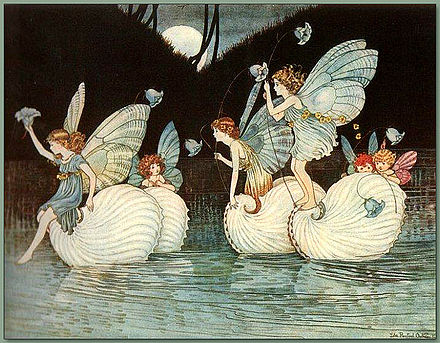
Fairy Islands from Elves and Fairies by Ida Rentoul Outhwaite, 1916
Fairies of either flavor have been flitting about literature for centuries. Consider Morgan le Fay in Le Morte d’Arthur, Edmund Spenser’s The Faerie Queene, Oberon and Titania in Shakespeare’s A Midsummer Night’s Dream, Tinker Bell in J.M. Barrie’s Peter Pan, Holly Short in Eoin Colfer’s Artemis Fowl, all the way up to Bloom in Doreen Cronin’s eponymously titled picture book and Mabel and the Queen of Dreams (inspired by Queen Mab in Shakespeare’s Romeo and Juliet).
C.S. Lewis, J.R.R. Tolkien, and others established fantasy as the subgenre of speculative fiction that employs magical elements set in an alternative world. Tolkien wrote in his essay “On Fairy-Stories” that fairy tales are distinct from traveller’s tales (e.g., Gulliver’s Travels), science fiction, beast tales (e.g., Aesop’s Fables), and dream stories (e.g., Alice in Wonderland). He felt that fairies themselves were not an integral part of the definition of fairy tales. Rather, fairy tales were stories about the adventures of men and fantastic creatures in Faërie, a marvel-filled magical otherworld. By that definition, The Lord of the Rings is a fairy tale.
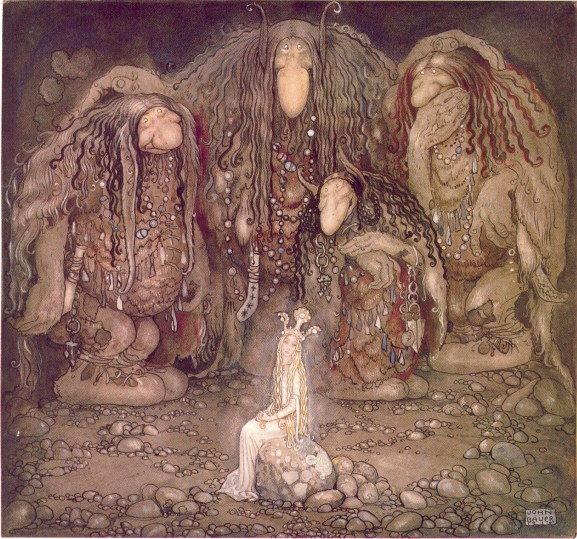
By John Bauer from The Boy and the Trolls, 1915
Urban fantasy** is a subgenre of fantasy set in an urban setting, typically in contemporary times. This setting violates Tolkien’s definition of a fairy tale, since the story takes place in the “real” world, rather than in Faërie. Thus, Mabel and the Queen of Dreams, though featuring a fairy, is an urban fantasy rather than a fairy tale, or as Tolkien preferred, Märchen (wonder tale).
Regardless of subgenre, I hope readers will find in my story what Tolkien posited for Märchen generally. “Far more powerful and poignant is the effect [of joy] in a serious tale of Faërie. In such stories, when the sudden turn comes, we get a piercing glimpse of joy, and heart’s desire, that for a moment passes outside the frame, rends indeed the very web of story, and lets a gleam come through.”
*Two major fairy tale classification systems are Aarne-Thompson and Vladimir Propp’s Morphology of the Folk Tale.
**Some notable urban fantasy includes the Kate Daniels series by Ilona Andrews, Modern Faerie Tales series by Holly Black, Dresden Files series by Jim Butcher, Weather Warden series by Rachel Caine, Mortal Instruments series by Cassandra Clare, Neverwhere by Neil Gaiman, The Southern Vampire Mysteries series by Charlaine Harris, The Hollows series by Kim Harrison, The Iron Druid Chronicles by Kevin Hearne, Feral series by Cynthia Leitich Smith, The Wicked Lovely series by Melissa Marr, October Daye series by Seanan McGuire, Marla Mason series by Tim Pratt, Simon Canderous series by Anton Stout, and Borderlands series by Terri Windling.


 Books and travelling with Lynn