#SPFBO 2018: The Finals
 17 January 2019
Filed under Book Reviews
Tags: #SPFBO 2018, Book 1, Out of Nowhere, Patrick LeClerc, The finals


You may have noticed if you visit this blog that the first stage of the Self Published Fantasy Blog Off concluded at the end of 2018. Three hundred books have been narrowed down to ten finalists. One each selected by the ten judges/team of judges taking part. You can check out my finalist here. And here is my post that also outlined the final nine and the runners up.
So, firstly feast your eyes on these lovelies: all the finalists in one beautiful display:
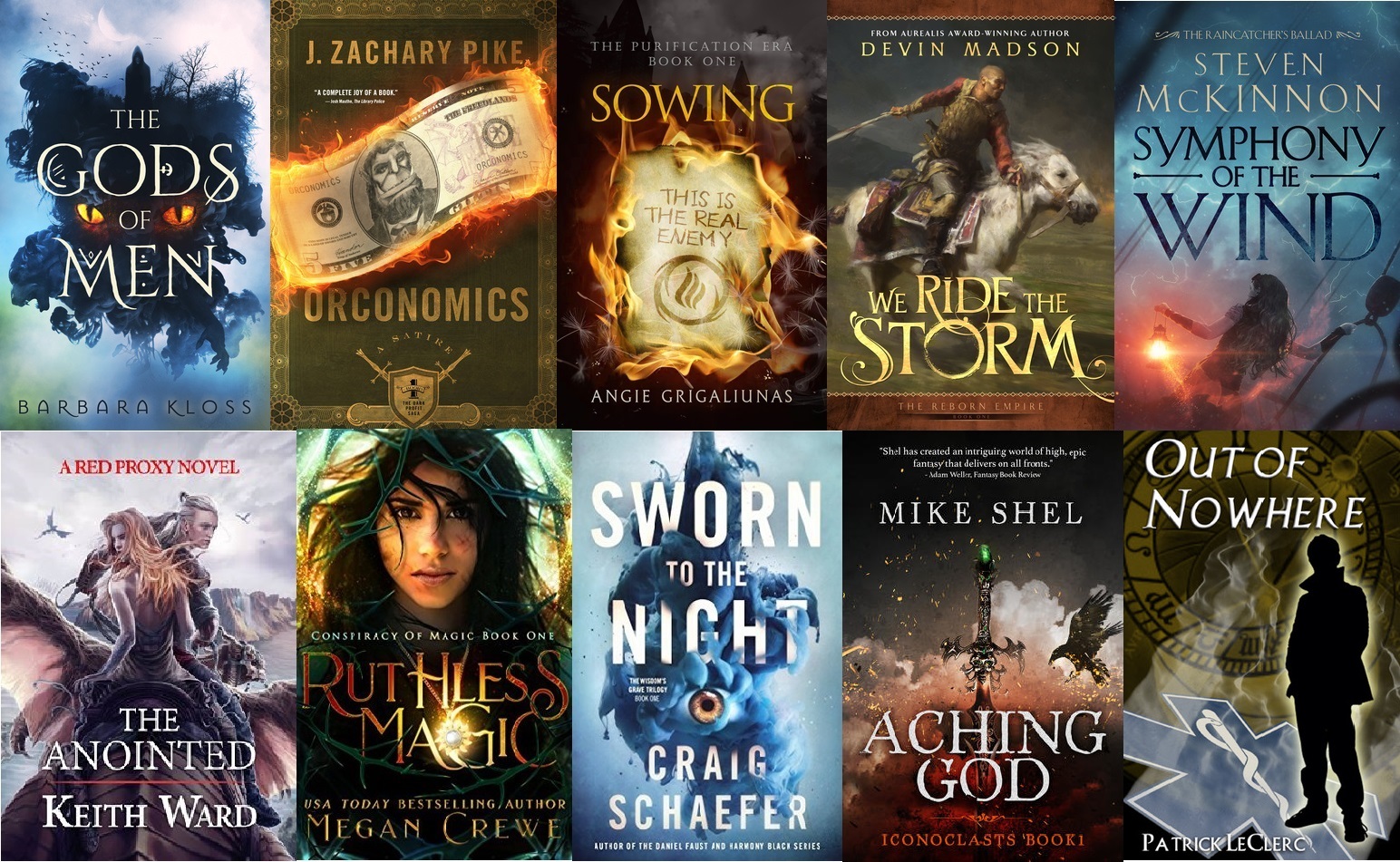
Check out this link to find out more about the competition and the scoreboard.
I’ve randomly chosen the order of my books and the first book I will be reading is: Out of Nowhere by Patrick LeClerc. I’ve put the description below for information:
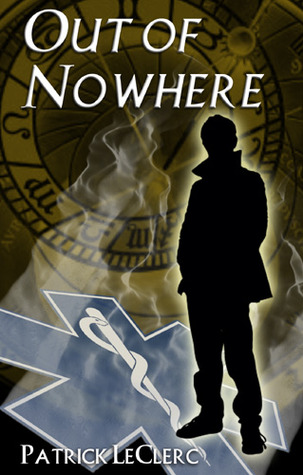 An urban fantasy, pacy, funny and compelling to the last page…
Healer Sean Danet is immortal—a fact he has cloaked for centuries, behind army lines and now a paramedic’s uniform. Having forgotten most of his distant past, he has finally found peace—and love.
But there are some things you cannot escape, however much distance you put behind you.
When Sean heals the wrong man, he uncovers a lethal enemy who holds all the cards. And this time he can’t run. It’s time to stand and fight, for himself, for his friends, for the woman he loves. It’s time, finally, for Sean to face his past—and choose a future.
A story of love, of battle—and of facing your true self when there’s nowhere left to hide.
Empire of Sand (The Books of Ambha #1) by Tasha Suri
17 January 2019
Filed under Book Reviews
Tags: Empire of Sand, Tasha Suri, The Books of Ambha #1
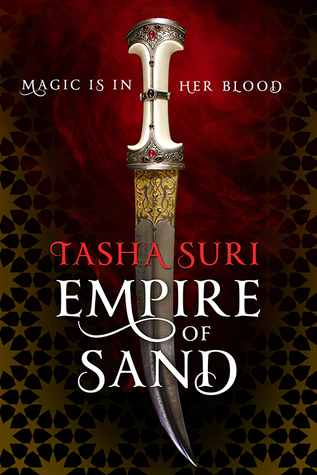 Empire of Sand is a book that I picked up with very little knowledge of other than liking the sound of ‘sleeping Gods’. I also confess that I was feeling a little under the weather when I finally had chance to read this and so I suppose I went into the book with a little less enthusiasm than I would normally feel. I suppose, basically, I’m saying this book had its work cut out to win me over and yet in spite of that I found myself being drawn in quite quickly and enjoying this more than I anticipated.
This is a very character driven story, beautifully written and with some wonderful world building that really brings the story to life. I did have some reservations but these really centre around a slight slowing of pace during the middle section of the book but in spite of that slight bloating I found myself enjoying Empire of Sand and think it’s an impressive debut indeed.
This is a story of Mehr, not so much a coming of age tale as a story of finding Mehr herself. With a dual heritage Mehr struggles to fit in. Her mother belongs to a now conquered race of people who are being forced to leave their culture and rituals behind, her father is a governor for the people who were the conquerors. Meanwhile the place itself seems to be balanced on a knife edge. The Gods themselves seem to be trapped in eternal sleep, enforced by the very magic that Mehr’s race are forbidden to use. The tension and danger are building and storms loom large. Gods don’t like to have their dreams dictated by mortals and there are few humans left who can now keep the God’s wrath in check. Mehr’s blood holds a hint of magic, her heritage stems back to a time when the God’s children, the Daiva, mingled with people leaving a trace of themselves in the blood of their offsprings. Most have now lost the ability to perform magic of any kind but a few still hold the secret in their blood.
The opening chapters were absolutely captivating. We meet Mehr and witness her struggles living amongst people who despise the Amrithi race, believing them to be uncivilised. Regardless of this Mehr practices the rituals that belong to her Amrithi background on a daily basis, taught by the one friend and remaining Amrithi woman who still lives in the city (under a different guise of course). Her step mother seems to despise her and her father rarely intervenes although he clearly loves his daughter. I guess he’s only too aware himself of the threat of exposure that hovers over his daughter’s head. Mehr’s sister, although sharing the same heritage, has been taken under the wing of Mehr’s stepmother who believes that she will be easier to mould being a much younger age than Mehr.
Of course, Mehr is fairly headstrong and when a storm finally hits the city she sneaks out to perform the dance rituals of her Amrithi people bringing herself to the notice of the Maha – the priest who heads the religious aspect of the empire. The Maha is worshipped almost fervently by some and when he sends his mystics with a marriage proposal for Mehr her fate is sealed. One simply does not refuse the demands of the Maha and his mystics! And so Mehr is wed to Amun. Wow, is Amun disliked or what – why yes, yes he is. Fully Amrithi, Amun is a dark character, he seems to have a foreboding or brooding presence, he speaks little and his skin is heavily covered with blue sigils that the Maha uses to enslave him and demand obedience.
I liked Mehr and thought her story showed a really impressive character arc. Put bluntly, and although she thought she had a difficult time at her father’s abode, she realises fairly quickly, once she leaves the city, just how privileged her upbringing has really been. Forced to march relentlessly across the desert, with little food and the most basic clothing she really struggles. When she finally reaches the Maha’s temple, an artificially created oasis deep within the desert, things become even worse. The Maha is a tyrant, he’s cruel and controlling. He demands that Amun and Mehr perform a dream ritual when the next storm approaches and Mehr isn’t anywhere near ready. The two will need to find a truce of sorts in order to succeed.
The next element of the story is where things slow down. This aspect of the story revolves around Mehr and Amun and the pair of them tentatively getting to know each other. This involves baby steps in which we see a growing of trust between the two until they both finally reach an understanding and come up with their own secret plan. Both of their lives will be in danger if the Maha discovers their duplicity. Here’s the thing, I’m not big on romance in books, but, more than that, I’m really not into instalove and so I have to hand it to the author for creating a relationship that develops in, for me, what felt like a natural way, that starts out from a basis of need and mutual respect to become a much deeper rooted feeling. Okay, this also slows down the movement going forward somewhat but to be honest I quite liked this element of the story. I also liked that it takes time for Mehr to get a feel for her new surroundings and the place she lives in.
There were a couple of things that perhaps got in the way of this being a 5* read for me. I didn’t particularly feel any real fear on behalf of Mehr or Amun. I don’t know why, perhaps I’ve become immune to threats when they’re posed, but I never really felt that the characters were in too much danger – although don’t let that belie the fact that they’re both put through the wringer a fair bit. It felt a little more like telling rather than showing. I felt the ending had a slightly rushed feeling to it and the threat of the Maha was maybe tackled much more quickly than I expected.
Regardless of a couple of small things I enjoyed Empire of Sand. I think I went into this read with less expectation than I usually would and this tempered the read for me. I wasn’t expecting a romance but as it happens I found it a vital part of the story and I loved the two different settings and the writing. This is lush – that’s the best way I can think to describe it. The colours, the sand, the Daiva, the dances, the rituals, the culture – just everything really. I also couldn’t help feeling that there was a subtle message tucked into the pages of this book, a message about the environment and keeping things in balance – but that could just be my vivid imagination at play.
I think my only proviso to future readers would be to be aware that the story takes it’s own time and refuses to be rushed by expectations of breakneck speed and of course there is a romance – which doesn’t always work for everyone.
I received a copy through Netgalley, courtesy of the publisher, for which my thanks. The above is my own opinion.
Can’t Wait Wednesday : Cage of Souls by Adrian Tchaikovsky
16 January 2019
Filed under Book Reviews
Tags: Adrian Tchaikovsky, Cage of Souls, Can't wait Wednesday, Wishful Endings

“Waiting On Wednesday” is a weekly meme that was originally created by Breaking the Spine. Unfortunately Breaking the Spine are no longer hosting so I’m now linking my posts up to Wishful Endings Can’t Wait Wednesday. Don’t forget to stop over, link up and check out what books everyone else is waiting for. If you want to take part, basically, every Wednesday, we highlight a book that we’re really looking forward to. This week my book is : Cage of Souls by Adrian Tchaikovsky
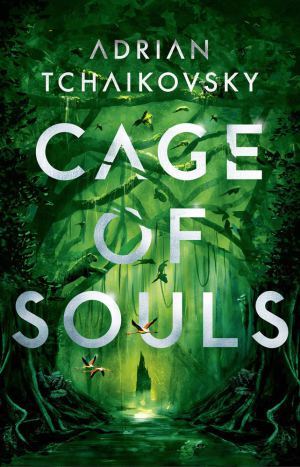 The Sun is bloated, diseased, dying perhaps. Beneath its baneful light, Shadrapur, last of all cities, harbours fewer than 100,000 human souls. Built on the ruins of countless civilisations, surviving on the debris of its long-dead progenitors, Shadrapur is a museum, a midden, an asylum, a prison on a world that is ever more alien to humanity.
Bearing witness to the desperate struggle for existence between life old and new, is Stefan Advani, rebel, outlaw, prisoner, survivor. This is his testament, an account of the journey that took him into the blazing desolation of the western deserts; that transported him east down the river and imprisoned him in verdant hell of the jungle’s darkest heart; that led him deep into the labyrinths and caverns of the underworld. He will treat with monsters, madman, mutants. The question is, which one of them will inherit this Earth?
Due for publication April 2019
New to me authors read in 2018
15 January 2019
Filed under Book Reviews
Tags: New to me authors, That Artsy Reader Girl, Top Ten Tuesday

Top Ten Tuesday is a weekly meme where every Tuesday we look at a particular topic for discussion and use various (or more to the point ten) bookish examples to demonstrate that particular topic. Top Ten Tuesday (created and hosted by The Broke and Bookish) is now being hosted by That Artsy Reader Girl and future week’s topics can be found here. This week’s topic is:
New-to-Me Authors I Read In 2018
So, I went through my list of books for 2018 and I had a lot of good books and a lot of those books were written by authors I’d previously not read, in fact I think a good number of them were also impressive debuts. I’ve narrowed it down as best I could – I’m still a little over the limit but here goes:
- Hazelwood by Melissa Albert
- The Mermaid and Mrs Hancock by Imogen Hermes Gowar
- Semiosis by Sue Burke
- Age of Assassins by RJ Barker
- Kin by Snorri Kristjansson
- Master Assassins by Robert V S Redick
- The Poppy War by R F Kuang
- The Last Sun (The Tarot Sequence #1) by K.D. Edwards
- The Silence of the Girls by Pat Barker
- Trail of Lightning by Rebecca Roanhorse
- The Silent Companions by Laura Purcell


Once Upon a River by Diane Setterfield
 Once Upon a River was one of my most anticipated reads for 2019. This is my third book by this author and frankly I find her a storyteller of unusual depth and charm. Her books have an almost ‘old quality’ and I find myself reading them with a powerful sense of nostalgia that takes me back to a time when my gran used to tell me and my sister old tales, some seemed to come straight out of her own imagination, some would be familiar, but those were times that we both loved and still hanker after. Once Upon a River has a beautiful fairytale feel that evokes times of old and tells the story of an ancient inn where people still come to share stories over a jug or two of beer.
As the story begins the regulars of the Swan Inn are exchanging yarns when the door bursts open and in steps a man carrying a child, the two of them drenched and clearly the victims of an accident of some sort. At first appearance the drinkers, maybe due to the drink, mistake the child for a puppet, her skin is so pale and waxy, and they focus their attention on the injuries sustained by the man until the innkeeper’s son realises this isn’t a puppet at all but a little girl of maybe 4 years. The local nurse is called for who, in no nonsense fashion, sets about attending to the man’s injuries. Meanwhile the body of the little girl is placed out of the way – it’s too late to treat her injuries, no pulse, dilated pupils and waxy skin tell their own tale. And yet, something bothers the nurse, a nagging doubt that drives her to check the little girl once again and discover that she isn’t dead after all. Mistake or miracle – the story is about to begin and their will be plenty of hypothesising and embroidering along the way.
I’m not going to elaborate further on the plot in this review. This is a mystery story with a historic feel that uses folklore, superstition and magical realism to drive the tale forwards.
There are quite a number of characters involved. We have a young couple who have suffered a terrible loss and are unable to drag themselves out of the depths of despair, we have a young girl who lives a strange existence on a remote spit of land along the Thames, we have a charismatic farmer and his family who seem to live a charmed life but for their oldest son who seems to be going astray somewhat, and we have the nurse, who long ago decided not to marry and bear children, having seen only too often the price paid in childbirth, however, that was before she found herself with a would be suitor in the form of the local photographer (who coincidentally was the injured man from the start of the story who has become fixated with the nurse who tended him). Finally, the young girl whose miraculous recovery sparked stories to spread like wildfire up and down the banks of the Thames. Everyone seems to be drawn to this young girl, she is an enigma, she hasn’t spoken since her recovery and her melancholy air draws people to her like a flame draws the moth. They want to look after her, make her smile, but she remains aloof, unhappy and desperately attracted to the river that almost took her life.
The setting has a period feel although I’m not sure if an actual year was mentioned. References to Darwin are made and the story has a Dicken’s feel in terms of the style and feel. At times, there is a romantic, meandering, almost lyrical feel. The place evokes a bygone age of charm and simplicity and yet at other times this is countered by the darkness of human behaviour and the more seedy side of existence. I also loved the role that the Thames plays – at times twinkling innocently in spite of it’s deep and perilous currents, at other times shrouded in mist and mystery. It almost takes on the persona of another character, sometimes moody, sometimes playful but always a force to be reckoned with and never to be underestimated.
The writing is beautiful, the type of writing that you simply have to savour. This is not a book to be raced through although it is certainly a page turner. I was quite bewitched to be honest although at the same time I would say this is a slow burner and at times there was almost a point where I almost, almost, reached that stage where I wanted to move forward and stop dwelling on a certain point – thankfully the author always seemed to move on at just the right moment. However, be aware that this book definitely has the feel of an old style classic both in terms of the gentle pace and old fashioned sensibilities. Personally, it worked for me like a charm but I recognise that I have a love of tales of this nature where the setting and telling have less of a contemporary feel and more of a determination to spin a tale that lures you slowly and surely.
Overall, I loved this book and I don’t have any criticisms. My only caution to perspective readers would be that if you’re expecting a headlong rush through a mystery novel then this might not be the book for you. If you like the idea of a beautiful, adult fairytale, told in a desultory fashion that evokes bygone days where magic and miracles still seemed possible then what are you waiting for. An adult fairytales that manages to blend, history, mystery, folklore, religion and science and with all those things in the mix leaves you feeling ‘what if’.
I received a copy through Netgalley, courtesy of the publisher, for which my thanks. The above is my own opinion.


