Review: Magic by Sarah Pinborough
 23 October 2024
Filed under Book Reviews
Tags: Beauty, Blood, Fairy Tales, Fantasy, Magic, Poison, Rapunzel, Review, Sarah Pinborough

My Five Word TL:DR Review: Pinborough, such a great storyteller
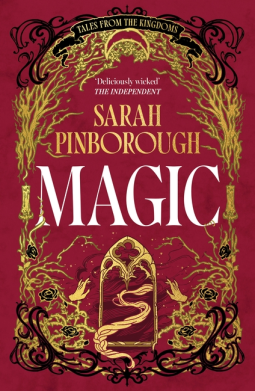
I love a good fairytale, but sometimes better still a good fairytale reimagined. If this is something you enjoy then I can’t recommend Pinborough enough. She has a wicked sense of humour, she turns everything on it’s head and I love the way she writes. Magic has been recently released as the first in the Tales from the Kingdom series. I’ve already read Poison, Charm and Beauty and loved them. I nearly had a conniption when I saw on Netgalley two new titles Magic and Blood. Magic is, as I understand it (although, ahem, I have been known to be wrong) being marketed as the first in the series, followed by the aforementioned three and then another new book, Blood, being the fifth instalment.
So, Magic is a retelling that predominantly focuses on Rapunzel but also captures so many other elements of stories that I’ve loved over the years. Aladdin plays a role, and believe me when I say he’s the furthest thing from the Disney imagined version than you’ll believe. Pinborough captures so many different elements and gives them all her own unique twist, I was filled with a lovely sense of nostalgia whilst reading at the same time as being dumbfounded at the creativity on display that takes all my ideas of tropes and characters and stamps them into the earth, followed by a quick dusting off of the hands and a hearty harrumph – take that you fairytale stereotypes. I mean literally, I loved this. I confess that I am a fan of the author and maybe I’m predisposed to like her work, I don’t know, but this book picked me up just when I needed it.
In fact the other three books are also available and as I no longer have copies (having given by beautiful hard copies to some scoundrel to read (and we all know how that goes) I’m tempted to request the others so I have the full set again, that way I could enjoy myself quite spectacularly reading all five in almost back to back fashion – is that greedy though?
As I said, this is Rapunzel’s tale. Rapunzel is a beautiful, sheltered, young woman who lives in a tower with her Aunt Gretel (we all know the tale of Hansel and Gretel and the gingerbread house – well, be patient). Anyway, Gretel is a witch, she makes charms or curses that are usually woven into spindles and she has many spinning wheels already imbued with such magic. Gretel has hidden herself away from the world, she’s raised Rapunzel to mistrust other folk, especially men. There’s no such thing as true love and men simply can’t be trusted (feels like a little play on Miss Havisham and Estella). Except, Gretel is becoming curious about the outside world and when she is given a book, by a friend, about love and romance, she finds herself longing to meet her very own Prince Charming.
Meanwhile, we have a King, he’s exploring the kingdoms (mainly sowing his wild oats) before he takes up his position of authority. He bumps into a young man who tells him of a beautiful maiden trapped in a tower by a cruel witch and he immediately imagines himself as the dashing hero rushing to rescue her. The young man who told him the story has his own motives, a room full of magic spindles seems too good to resist.
I think I’ve already told you too much of the plot so I’ll stop there. Pick these up and enjoy them for yourselves.
What I loved.
The writing. It’s clever and well plotted. The stories are written with Pinborough’s wicked sense of humour and it comes across so well. There’s a determined tongue in cheek poking of fun at everything you may have come to expect from such tales and it ultimately comes together in a perfect package.
I really enjoy the way the author turns the characters around. We have Aladdin, we even have a genie and a lamp, but they’re so unexpectedly different. I won’t say more.
All of the books are set within the Kingdoms and this is another reason why I’m tempted to read all of them in order, why deny myself such fun after all. They’re all connected in small ways so I highly recommend picking up all five and reading them all in order.
I can’t add too much more, well, other than the fact that these books are so easy to read and are good stories packed with humour and a little bit of sizzling sexiness. And, the cherry on top – this is ultimately a story of true love.
This book was the pick-me-up that I didn’t know I needed.
I received a copy through Netgalley, courtesy of the author, for which my thanks. The above is my own opinion.
My rating
5 of 5 intoxicatingly delicious stars
#SPFBO Guest Post: Finding Fairy Tales by A M Justice
22 September 2018
Filed under #SPFBO, Book Reviews
Tags: #SPFBO 2018, A Wizard's Forge, AM Justice, Rapunzel
Today, I’m really pleased to welcome to my blog the author of A Wizard’s Forge: Amanda Justice. Amanda has written a post about the inspiration for her book A Wizard’s Forge which will be one of my upcoming reads for the Self Published Fantasy Blog Off. A Wizard’s Forge is a deconstructed version of Rapunzel. If you know anything about my blog you’ll know I love fairytale retellings so excitement am I to read this post:
 ‘Sometimes inspiration is like a beacon, drawing the author toward her goal. Other times, the influence is a sleeper agent that infiltrates the subconscious and adds unexpected layers to the narrative. My SPFBO 2018 entry, A Wizard’s Forge, is a retelling of “Rapunzel,” but not necessarily one I set out to write.
Because we’re usually introduced to fairy tales as children, and we hear or read them over and over, they tend to embed themselves in our consciousness. They also frequently portray universal themes—fairy tales from different cultures all over the world often carry similar messages about compassion or justice. I think the universal nature of these stories is why bookstore shelves are loaded with fairy tale retellings. Western folk tale–inspired stories tend to dominate English-language fantasies, including modern-day classics such as Gail Carson Levine’s Ella Enchanted (“Cinderella”) and Fairest (“Snow White”) and Shannon Hale’s Books of Bayern (starting with Goose Girl) as well as the recent novels A Dance of Silver and Shadow (“The Twelve Dancing Princesses”; an SPFBO 2018 entry) by Melanie Cellier and Spinning Silver (“Rumpelstiltskin”) by Naomi Novik. But fairy tales turn up in other genres too. Marissa Meyer’s Lunar Chronicles (Cinder [“Cinderella”], Scarlett [“Little Red Riding Hood”], etc) are set in a high-tech, dystopian future and feature cyborgs as the protagonists. Jane Rosenberg Laforge’s Hawkman (“The Bearskin”) takes place in post-WWI England and is more magic realism than fantasy. Roxane Gay’s An Untamed State (“Rumpelstiltskin”), set in modern day Haiti, is straight contemporary fiction and doesn’t contain any magic at all.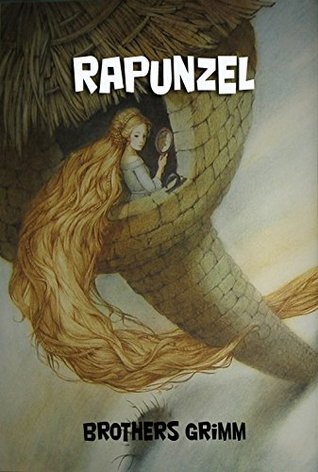
“Rapunzel” nestled down in the bedrock of my psyche and from there bubbled up into the making of A Wizard’s Forge. The inspiring elements were melted and remixed in the idea cauldron, so the source material may not be as obvious as it is in other retellings. On the surface, A Wizard’s Forge is a science fantasy about a young woman’s quest for vengeance. The setting on a lost space colony is inspired by Anne McCaffrey’s Pern, and the fantasy creatures (i.e., aliens) are directly descended from 1950s sci fi films featuring giant insects (e.g., THEM!). The story deliberately subverts a lot of fantasy tropes, starting with a damsel in distress who saves herself, then tries to save a prince. In addition, Victoria, the heroine, might be a chosen one, and she’s given a special talisman before departing on a quest to defeat an evil high lord. Where the book departs from high fantasy is that the lord’s power is psychological, not magical. He holds Vic captive at the beginning of the story, and her desire to avenge herself is complicated by a case of Stockholm Syndrome. There’s also a long war, a clash between religion and atheism, those giant intelligent insects mentioned above, and a taste of wizardry, which in Vic’s world is a mysterious power that is usually lethal to those who try to wield it.
I know what you’re thinking: that doesn’t sound anything like Rapunzel!
 But it is. Rapunzel involves a girl with very long hair who is held in isolation in a tower by a powerful, jealous person. A prince finds the tower, sneaks in, and he and the girl fall in love. Discovering them together, the enraged captor throws the prince out a window into a patch of nettles. Blinded, he wanders off into the wilderness. After shearing off the girl’s hair, the captor magically banishes her to another land. Eventually, the prince and girl find each other, and her joyful tears wash the nettles from his eyes, restoring his sight.
All of that is in A Wizard’s Forge:
- A powerful person is obsessed with Vic and keeps her locked up by herself in a tower.
- Vic has long hair that is central to her identity; her captor cuts it off.
- A harrowing event centers around the tower window.
- Vic’s sexual awakening has dire consequences for herself and others.
- A jealous rage provides an opportunity for escape.
- There’s a prince.
- Someone goes blind.
- There’s a separation and a reunion.
As Jo Niederhoff recently discussed on Fantasy Faction, fantasy and fairy tales share many common tropes and themes, such as the hero’s journey, hidden royalty, and magic, all of which turn up in A Wizard’s Forge as well. But some important differences between fairy tales and fantasy are worth noting. In his essay “Tree and Leaf,” J.R.R. Tolkien explained the idea of “secondary belief,” in which fantasy authors must construct their worlds in such a way that readers believe the story while they’re immersed in it, whereas fairy tale tellers don’t need to explain anything. Donald Haase, editor of the Greenwood Encyclopedia of Folktales and Fairy Tales, echoed this idea by saying belief is the main difference between fantasy and fairy tales. Fairy tales aren’t necessarily made to be believable, because the goal isn’t immersion but instruction. The fairy tale is like a didactic lecture or sermon, meant to impart wisdom or knowledge. A fantasy, however, is a philosophical discussion between author and reader in which the reader must accept the author’s premise to understand the author’s observations and message. Fairy tales teach; fantasies enlighten.
Whoa! Enlighten—that’s a rather highfalutin notion, isn’t it? I’d argue that the fantasy genre encompasses a wide range of fiction, from purely escapist, easy reading pulp to literary masterworks. Regardless of where a book falls on that spectrum, by simply positing societies and individuals that are different from us or approach problems differently, fantasies force readers to think about the world in new ways, opening the door to epiphanies about how our world works. That was certainly my goal when I wrote A Wizard’s Forge, and I think the elements from “Rapunzel” that infiltrated the story helped me achieve it.
For more information about Amanda and her book:
Website: www.amjusticeauthor.com
Twitter: https://twitter.com/AMJusticeWrites
Facebook: https://www.facebook.com/AMJusticeauthor/
Goodreads: http://www.goodreads.com/author/show/6903962.A_M_Justice
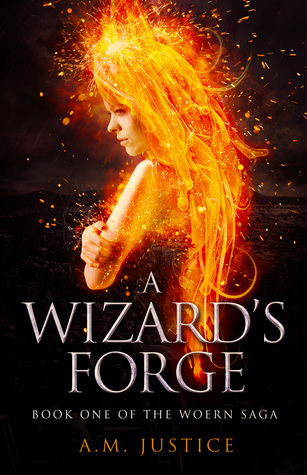
Thank you Amanda for providing me with this great guest post. I’m really looking forward to picking your book up and wish you all the best with the SPFBO.


 Books and travelling with Lynn