Vintage Sci Fi: Book No.25
 25 January 2016
Filed under Book Reviews
Tags: Book Covers, Little Red Reviewer, Logan's run, Vintage Sci Fi, William F Nolan and Clayton Johnson

 No.25 Logan’s Run by Williams F Nolan and George Clayton Johnson
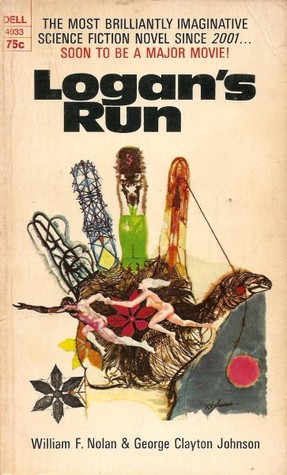
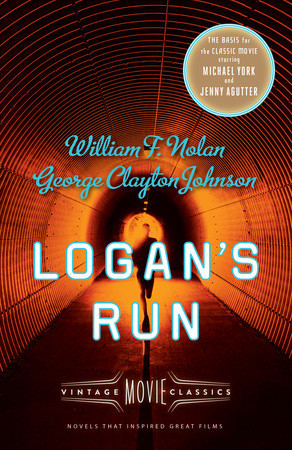
As part of Vintage Sci Fi month being hosted by Little Red Reviewer I’ve given myself a small challenge to post a vintage book each day – one that I’ve read – and to highlight some of the covers. Today’s choice is : Logan’s Run by Williams F Nolan and George Clayton Johnson. Logan’s Run was first published in 1967 and is set in a dystopian future where people only live up to the age of 21. Which is to say everyone is required to die at that age. It’s not a novel that I loved although it’s a very interesting concept and a fast paced read. I’m sure that most people will probably be familiar with the movie if not the book. I like the 2000 cover most out of these:
First Edition 1967:

1969 Dell:
1976 Corgi:
2000 Bantam:

2015 Vintage:
Vintage Sci Fi: Book No.24
24 January 2016
Filed under Book Reviews
Tags: Book Covers, Ira Levin, Little Red Reviewer, The Stepford Wives, Vintage Sci Fi
No.24: The Stepford Wives by Ira Levin
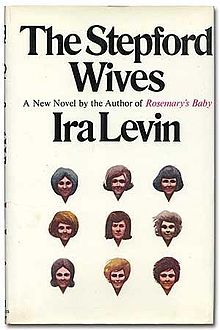
As part of Vintage Sci Fi month being hosted by Little Red Reviewer I’ve given myself a small challenge to post a vintage book each day – one that I’ve read – and to highlight some of the covers. Today’s choice is : The Stepford Wives by Ira Levin. This is one of my ‘is-it-isn’t-it’ sci fi choices. This is a great story though and who among us doesn’t know the ‘Stepford’ term – it’s become quite symbolic. Originally published in 1972 the book leaves the final interpretation fairly vague – unlike the film which definitely sci-fis the story up! Anyway, satire, horror and a little sci fi – I’m going with the brainwashing theme to support that conclusion:
First edition cover:
1972 Library Magna:
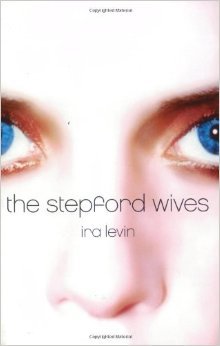
1998 Bloomsbury Publishing:

2011 Corsair:
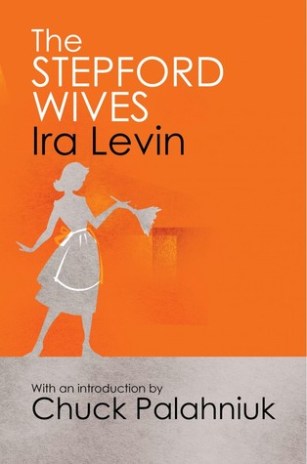
The War of the Worlds by H G Wells
24 January 2016
Filed under Book Reviews
Tags: H G Wells, Little Red Reviewer, The War of the Worlds, Vintage Sci Fi

1927 reprint: Amazing Stories
The War of the Worlds by H G Wells is my first book as part of Vintage Sci Fi being hosted by Little Red Reviewer. I was really looking forward to this as I do love the Time Machine. The TL:DR version of this is that this is a very intriguing novel, it explores a lot of themes, for the time it was written it has great imagination and it certainly helped to spawn a number of other works of sci fi, however, I must confess, that I didn’t enjoy this as much as the Time Machine.
The War of the Worlds is told by an unnamed narrator and recounts the tale from start to conclusion of the invasion of earth by martians from the planet Mars:
‘Yet across the gulf of space, minds that are to our minds as ours are to those of the beasts that perish, intellects vast and cool and unsympathetic, regarded this earth with envious eyes, and slowly and surely drew their plans against us.’
These alien creatures have basically been looking at the earth and their own planet being dry and barren have been coveting something else. And so, using cylinders that are shot from their planet they descend upon our world and wreak havoc with their powerful weapons. Ray guns that incinerate whatever they touch into oblivion and poisonous gases that shroud the countryside killing everyone they touch.
This is without doubt a fascinating story. It is probably a reflection of the period where the threat of invasion was feared. It’s interesting to read the narrator’s thoughts on the aliens themselves. They have developed massively in intellect and consequently have become so intelligent that even compassion seems to have been eliminated. They destroy without feeling, equally without malice, they simply intend to inhabit this world and in doing so will not only kill and obliterate everything that stands against them but also ultimately will use humans the way that humans use beasts of burden.
On the face of it though, and in spite of this novel being called The War of the Worlds, the action is quite confined and limited to London and its surrounding environs where utter destruction and death is inflicted upon the local populace. Obviously the intention would have been to spread further afield and in fact the martians were building flying machines for that very purpose.
We follow in the footsteps of the narrator who along the way encounters a number of people and adventures. Again the narrative takes a strong look at the way that civilisation crumbles very quickly in the wake of such disaster with the saying ‘every man for himself’ being particularly relevant. The storyteller manages to retain a certain amount of self respect and still tries to help people along the way although he reaches a particularly dark period when he becomes thrown into close confines with another person, known as the Curate- who seems to be spiralling into madness.
The story is told in two halves. The first being the invasion when people are trying to fight back or flee the martians. The second half is where people apparently realise that this is a war that they’re not going to win and they start to focus on staying alive, foraging for food and staying under cover.
I did enjoy this book but think I perhaps would have enjoyed it more had I read this before The Time Machine. As it is I think I expected a certain type of writing style which isn’t found here. This is almost a coldly recounted story. There is very little characterisation and the absence of this makes it difficult to feel any real fear or joy for the narrator.
I’m glad I read this though, it is a very compact and inventive story. I was particularly interested to watch how news of the martians was very slow to spread and people even in neighbouring villages seemed to treat the rumours as mere trifles until real disaster struck. We really do take our modern technology for granted I suppose with stories circling the globe in a matter of minutes. It was really intriguing to witness these restrictions written at a time when they were the norm. I leave you with the following (although, be warned if you haven’t read this or seen the adaptations you might want to avoid as it is something of a spoiler):

‘By the toll of a billion deaths man has bought his birthright of the earth, and it is his against all comers; it would still be his were the martians ten times as mighty as they are.’
Vintage Sci Fi: Book No.23
23 January 2016
Filed under Book Reviews
Tags: Book Covers, Little Red Reviewer, Robert A Heinlein, The Moon is a Harsh Mistress, Vintage Sci Fi
No.23: The Moon is a Harsh Mistress by Robert A Heinlein
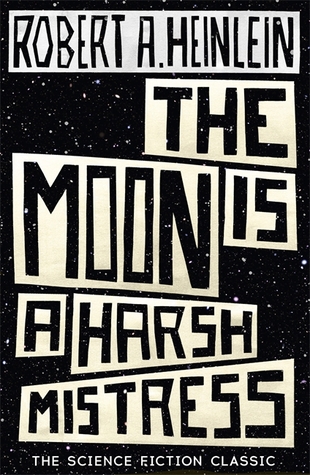
As part of Vintage Sci Fi month being hosted by Little Red Reviewer I’ve given myself a small challenge to post a vintage book each day – one that I’ve read – and to highlight some of the covers. Today’s choice is : The Moon is a Harsh Mistress by Robert A Heinlein. First published in 1966 this story largely takes place on the Moon which is used by the Earth as a self policing penal colony. I think my favourite amongst these covers are the three later ones.
1966 first Edition:
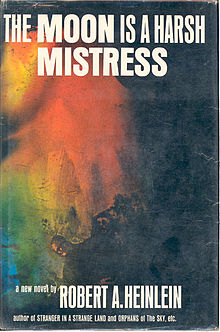
1968 Berkeley:
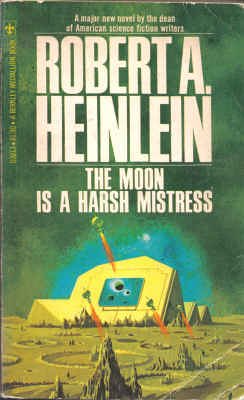
1979 by NEW ENGLISH LIBRARY:
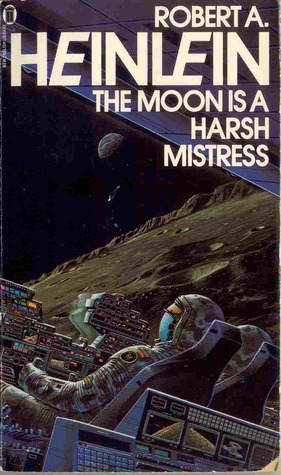
1981 Berkeley:
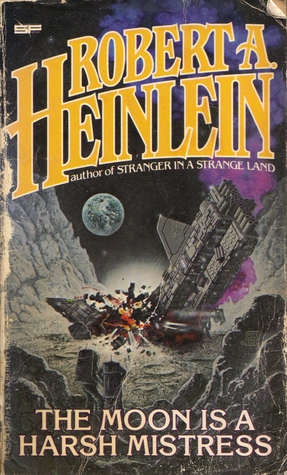
1987 by Ace Books:

1998 by New English Library:

2001 by Gollancz:
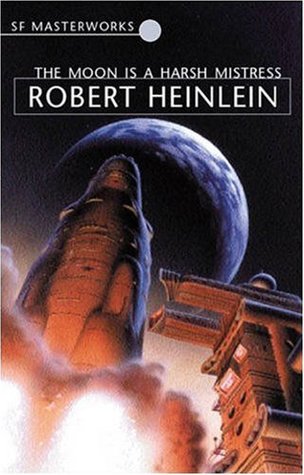
2005 by Hodder & Stoughton:
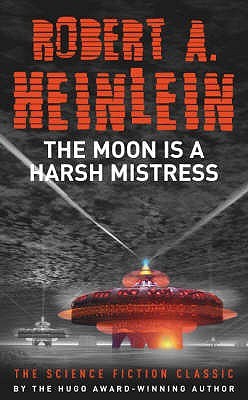
2015 by Hodder & Stoughton:
Vintage Sci Fi: Book No.22
22 January 2016
Filed under Book Reviews
Tags: Book Covers, Little Red Reviewer, Vintage Sci Fi
No.22: Animal Farm by George Orwell
As part of Vintage Sci Fi month being hosted by Little Red Reviewer I’ve given myself a small challenge to post a vintage book each day – one that I’ve read – and to highlight some of the covers. Today’s choice is : Animal Farm by George Orwell. Now this is another one of my choices where I wonder whether I’m stretching the definition of sci fi a little bit. Published in 1945 this is part political allegory and part dystopia – although I don’t think I realised that when I first read it!
First Edition:
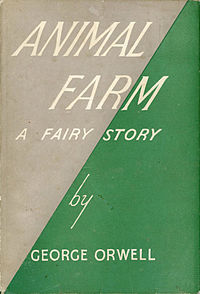
1946 Signet – I like this one:
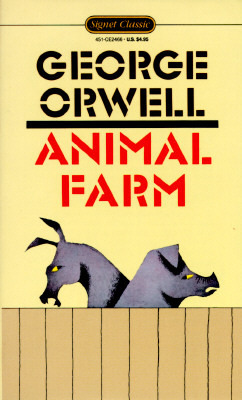
1964 Penguin: that’s a scary cover – reminder not to visit THAT farm!
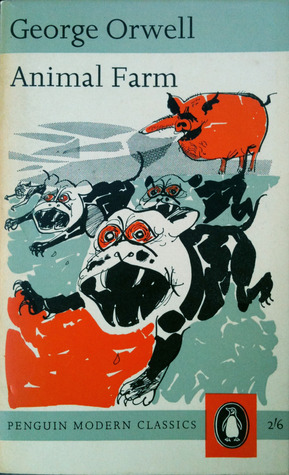
1982 Penguin: psychedelic much:
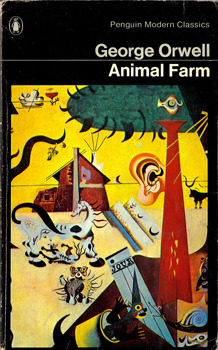
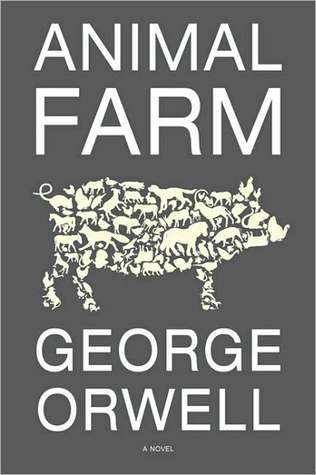
1996 Plume Books – I actually really like this one:
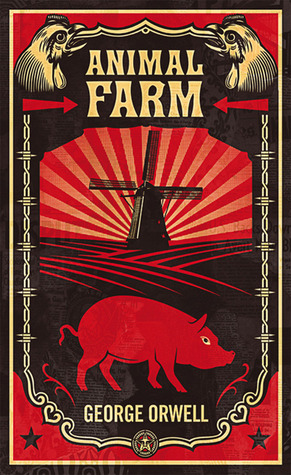
2008 Penguin:


 Books and travelling with Lynn