Crescendo by Becca Fitzpatrick

Crescendo is the second novel by BF – the first being Hush Hush – and continues the story of Nora and Patch.
Frankly, this story was… very, very good. I liked Hush Hush but Crescendo was better. At the time of reading Hush Hush I had already read Fallen. I liked Fallen at first, I was enjoying the story and the setting, which was quite gothic, but frankly I found the ending a bit surreal, one minute you’re in a sort of reform school and the next there are angels having a full on war – and nobody seems to bat an eyelid (because that happens all the time after all). To a certain extent it made me have second thoughts about reading Hush Hush but I was glad I read it and to be honest I did prefer it (although I do prefer the Fallen/Torment covers to Hush Hush/Crescendo).
Back to Crescendo. At the start of the book Nora did get on my nerves a little bit at first but as I read on I couldn’t really remember why that was! Looking back it was probably just her immaturity as she is only 16 after all!! The story in Crescendo picks up where Hush Hush left off and after a very short time becomes addictive. There are plenty of dark and creepy moments – the scene in the library gave me the chills – and there are plenty of intense moments between Nora and Patch – particularly thinking of the time when Patch first appeared in one of her dreams. There are so many twists and turns in this story that I think I could do with rereading it. I must admit that I wondered if we were going to have yet ANOTHER love triangle on the go when Scott arrived on the scene but thankfully that wasn’t the case and I actually kind of liked Scott and felt sorry for him on a number of occasions in the book because he seemed genuinely afraid.
What can you say about Patch, he seems to be the bad boy, but is that because everybody wants him to be? I don’t know. In Hush Hush I never really felt like he was a threat to Nora because he had plenty of opportunity to hurt her if he wished to but didn’t do so. And, similarly, in this novel, I think Nora misunderstood him (although he didn’t go to too much trouble to convince her to the contrary I suppose). Even so, I don’t really see him as a bad boy – more that he’s just cynical (how could you not be if you’d been around for that length of time???)
I also really liked the characters more in this book. Vee was so funny (also I laughed out loud at the scene when – and not trying to give away spoilers here – when Patch phoned Nora and she was in a very compromising position – you’ll know immediately what I mean if you read this), back to Vee, I really liked her in this book, she’s like the light relief element. And, I liked Marcie, (which you’re probably not supposed to) but I tend to like the super bitchy girls in these novels (it’s just that they seem so untouchable and totally unphased by anybody else as though nothing can affect them – and yet, actually, they’re always more vulnerable than they seem).
Now, the ending, which can sometimes be such a let down. Not here, I’m not saying that I hadn’t second guessed some of what was going on, but I certainly hadn’t seen everything coming! And the whole setting in the fairground was excellent.
If I had any criticisms (and you always have to have a couple don’t you??) I was surprised that Nora didn’t stand up to her mother more – for example, if I tried to arrange some sort of blind date/set up/ dinner party for one of my daughters – no, nope, no way, absolutely no way would they go along with it – no matter how much I might scowl (or beg, or shout, or bribe)! Plus, here you have a situation with a family – living out remotely in some creepy setting in the middle of nowhere – the father has been murdered and the daughter has had all sorts of near death experiences (in Hush Hush) – but here they are, in the second novel, still living in this remote farmhouse – with the mother practically never there. Really, I’d be scared to go to bed. There’s no way that as a mother you wouldn’t just move out of there – especially after what happened in book one – you would be out of there and living smack bang in the middle of civilisation – probably not in the police station but as near as you could get.
The book ends on a cliffhanger and we’ve got a long wait to find out what happens next..
My verdict. A definite must read.
Rating A+

Crescendo
The Heretic’s Daughter by Kathleen Kent
 22 October 2010
Filed under Book Reviews
Tags: Becca Fitzpatrick, Crescendo, Hush Hush, The Heretics Daughter
Just finished reading The Heretic’s Daughter by Kathleen Kent
This story is set during the period of the Salem witch trials and is told in the voice of Sarah Carrier, daughter to Martha Carrier. The Carriers are farmers and the first half of the book pulls you into their life – and what a hard life it is. The carriers move to live with Sarah’s mother when the pox infects their village and unwittingly carry the disease with them. The result of this is that they are held in suspicion and resentment by a lot of the villagers in Andover.
I don’t particularly know much about this period in time – other than bits and pieces in films and books – and therefore I’m far from being an expert. I think in a way this is what made this book more interesting reading and picking up all these little random pieces of information that I’d never heard about before. I never really quite understood before exactly what the whole ‘witch trials’ were really like. I mean they were basically horrendous and seemingly all caused by greed, jealousy, envy and hysteria.
Reading the trials, for example, was so frustrating that I could have thrown the book against the wall in anger. Just so annoying, innocent people having to confess to all sorts of wrong doings or otherwise be tortured. What sort of a trial was that anyway – nobody was innocent – they were already guilty before they stepped into the room.
Anyway, rant over. This book is good. It pulls you into the lives of the Carriers and makes you care about them and the outcome.
It’s a harsh tale and frankly sad but it’s well written and by an actual descendant of one of the condemned witches. Difficult to believe that this is a first novel.
I liked this book, it didn’t take long to get involved in the story, it was interesting and at the end gripping.
Rating B+
Went mooching at weekend and bought a few books (don’t want to run out after all!!) The Heretics Daughter – Kathleen Kent; Remarkable Creatures by Tracey Chevalier, No One You Know by Michelle Richmond – all these were my charity shop bargains. Plus I bought Crescendo by Becca Fitzpatrick. Decided to read the Heretics Daughter first…

The Heretic's Daughter
Spy Glass by Maria Snyder
20 October 2010
Filed under Book Reviews
Tags: Graceling, Kristin Cashore, Maria Snyder, Poison Study, Spy Glass
I’ve read all the books in this series starting with the Study books (Poison/Fire/Magic) and then moving on to the Glass series (Storm/Sea/Spy). I think MS has managed to create a wonderful realm with this series of books and there is still a lot more scope to take it further. The Study books are based on a character called Yelena and the first book is really good and gripping. There’s a little bit of everything in there, new world to come to grips with, magic, adventure and romance and I particularly like the character of Valek. The second series of books is based on one of the characters introduced in the Study series – Opal. On balance, having now completed both series I would probably say that my favourite book is Poison Study and maybe that’s because it was the first book and everything was new and exciting, plus MS writes about the people and places so well so this first book really brought to life this other ‘world’. But, that being said, I think I probably prefer Opal to Yelena. Although Opal does seem to walk into ‘traps’ very readily which can frankly be a little bit annoying sometimes!
I enjoyed this book and thought it had a good ending although it did seem long somehow – I can’t quite put my finger on why. I wouldn’t say I was bored or found it tedious but there was something akin to a feeling of ‘repetition’ or ‘been here before’. I don’t know – I think I’ll have to have a bit more of a think about it. Perhaps it’s because of the lack of magic in this book which concentrates much more on Opal’s quest. Obviously there are elements of magic in the story but the overall feel is different.

- Spy Glass
SPOILER ALERT – I did think that the latter end of the book was written really well when Opal was at the command of Galen and was taken to the Bloodrose clan – her experiences there were so humiliating and frustrating although I’m not sure that I understand exactly why all the Bloodrose clan went along with their Leader’s strange vision (particularly as he didn’t seem that powerful)??
Also, I was puzzled earlier on, when Opal was at the Citadel, about her ability to create magic detectors as she was supposed to have lost all her magical abilities??
SPOILERS ALERT OVER!
Those points aside I would definitely recommend reading the concluding novel and I would recommend to those who haven’t read the Study series to go back and do so.
Rating B+
Generic comment – Is it just me or is there becoming a tendency to write about love triangles?? Twilight Series, Hunger Games, Glass Series, Forest of Hands & Teeth, Dead Tossed Waves, etc. The whole thing makes me feel bad and I always feel so sorry for the one who is let down? I can see the point and obviously it gives another dramatic element to the story I suppose – but what puzzles me is that there never seems to be any guilt about this from the person who has two people chasing around after them? For example, in the Mockingjay, Katniss feels guilty constantly about everything that happens throughout the story (a lot of which is completely outside her control) but she never feels guilty that she has two love interests (even though she could actually do something about this by making a choice)? I mean surely you would feel some guilt about that?
Recommendation: I think that anybody who likes the Study/Glass novels should definitely take a look at Kristin Cashore’s two novels: Graceling and Fire.
The Girl Who Kicked the Hornets’ Nest by Stieg Larsson.
17 October 2010
Filed under Book Reviews
Tags: Stieg Larsson Novels, The Girl Who Kicked the Hornet's Nest
Wow, what a masterpiece. Stieg Larsson has created three fantastic books in his Millennium trilogy. The man was an absolute genius and it is such a pity that he is no longer around and was never aware of how successful his novels would become.
I must admit that I didn’t love all of this book. The first couple of hundred pages were okay but probably suffered from the fact that Lisbeth had only a very small role as she was pretty much out of action. The middle section of the book is incredibly complex with lots of new characters being added to the mix – at one point I considered making a chart with everybody on it just so that I could keep up with all the different plot lines and who was working for who and who had been killed and which person was following which person… Having said that my interest did wane a little bit in the middle section and if I hadn’t been so interested in the outcome I may have given up (sacrilage I know). But, I didn’t, I carried on and it was well worth it. The last couple of hundred pages were brilliant and I could barely put the book down as it was so gripping.
Some people may consider that to read a novel of this size (and it is a big book with a lot of pages of fairly small text) and to have to read a few hundred pages before you’re hooked isn’t worth it – but it really is. SL was simply brilliant at constructing a complicated plot and managing to bring it all together so smoothly in the finale.
Strictly speaking I think some of the text could have been edited and maybe that would have made the novel a bit more punchy. SL almost writes his novel like a police report i.e. (and not quoting actual text here) ‘Berger woke in the morning and dressed in black jeans with a white cotton shirt and a grey jacket. She made coffee and read the papers then made a flask and sandwiches before leaving for work in her blue mini. She drove down Peel Street and crossed over the junction towards High street. She turned right onto Elm street before parking at the junction of Elm Street and Park Street’. I don’t mind a bit of detail but sometimes I think you must ask ‘did that sentence actually bring anything to the novel at all??’ And I’m not convinced that all of it does. Plus every new character is introduced with almost a full history of their background and again I’m not sure it adds anything. Perhaps the extra detail means more to those readers who are actually familiar with the places being written about and will make them feel more connected to the story somehow. I suppose if I read a novel that was based somewhere that I know well I would probably enjoy that extra level of detail because it would feel more personal??
Objections aside I have to hand it to Stieg Larsson for being a master at concluding his story. Absolutely no stone is left unturned. There is no sense of a rushed ending which sometimes happens in books and leaves you feeling really disappointed or cheated somehow. No, the ending of this book is perfectly paced and leaves you feeling really satisfied, if not a little sad.
The other thing that stands out to me about this trilogy is the way in which each novel is different. The first novel was obviously the introduction and was really set up as a murder mystery, but, to be honest it’s like that was just a foil to allow all these characters, who would eventually play such a big part in each other’s lives, to come together. The second novel was like an unravelling of Salanders background, again with quite a bit of intrigue and action thrown in, but written in such a way to start to give you an idea of the scale of the deception involved and the third novel was the final coming together of all the pieces, everybody being revealed and the leading character succeeding against all the odds! Quite uplifting. And, even though Lisbeth was such a ‘difficult’ sort of person (understandably so) and had practically given up on people and built a wall around herself – in spite of that she ended up with so many people who actually really wanted to help her and were firmly in her corner.
I would definitely recommend reading this book – let’s face it you can’t not read it if you’ve already read the other two! And I would certainly highly recommend all three of these books to anybody.
Rate these books with an A – and would say that book number two is my favourite of the series.

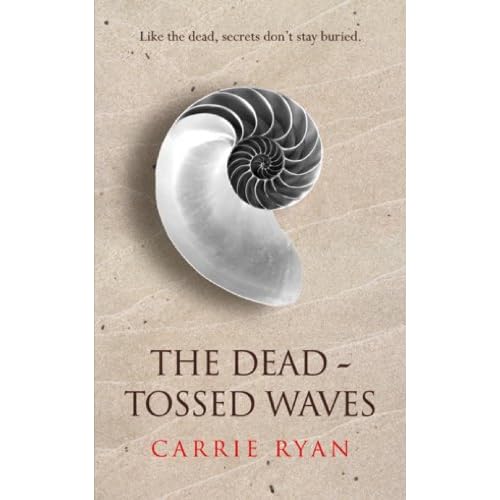
The Dead Tossed Waves by Carrie Ryan
I really enjoyed this book. The first book is called The Forest of Hands and Teeth and I think I probably read it last August?? When I was on holiday if I remember correctly. I really liked the Forest of Hands and Teeth – I probably can’t remember all the character names now but the basic premise, the world that Carrie has created and the whole mystery with the Sisters and the way in which they control the village was really gripping. Also, this book was, I felt, a refreshing change. After all, and I know I read all of them, but we have an awful lot of stories about vampires and werewolves! Couple this with a well written love triangle and bah da bing. I really liked the FOHAT and was anxious to read the second book – I’m sure that the end of the first book was disappointing to a lot of people (because it wasn’t a traditional happy ending – or more to the point it didn’t have a conclusion as such) but I didn’t really feel like that because everything was still open and as we know with books anything can happen (also so many books are now written as trilogys that you expect the first and second to remain a bit open).
The Dead Tossed Waves is listed as a companion novel and by that what is meant is that it is not told in the same voice as the first book (i.e Mary). Gabry, Mary’s daughter continues the story in the second novel.
I really enjoyed this book (even more so than the first). The story continues but also develops. New concepts are brought into play and the world in which we are now moving is expanded. The first novel was mainly contained to the Forest and the concept that there was nothing else. The second novel is based in a new place called Vista. Vista is small and fairly self contained but is aware of the wider world and is part of a system called the Protectorate. There is even the possibility (through serving in the militia) to move to the Dark City! However, serving in the Militia is not exactly ‘nice’ and more than likely will lead to death.
What I really like about the book is that it’s now starting to expand, it’s fast paced (virtually from the start of the book) and it’s unpredictable – Carrie is definitely not frightened to sacrifice characters along the way, and, to be honest, given the situation they’re all living in this is understandable.
I suppose if I have any criticisms they would probably be related to the fact that Gabry constantly blames herself for everything (and this is a criticism that I voiced in a previous book (Mockingjay) – so perhaps this is a teenage thing, to constantly blame yourself for everything that goes wrong and feel responsible for the consequences. Although having three teenagers I can’t say I’ve noticed this as one of their prevalent characteristics (perhaps they hide it well??) I mean, basically, at the start of the book an event takes place that changes everybody’s lives – but, if you really think about how that event started (and I’m trying to not give away spoilers here) it wasn’t really Gabry who instigated anything. And, yet, none of the others- such as Catcher, or his sister – seem to be ridden with guilt!
The only other criticism I would probably have is why the living don’t try to eliminate more of the ‘unconsecrated’. They seem mainly to concentrate on keeping them out or running away. Alright, maybe that’s to do with people hanging on to their sense of morality and not just wanting to ‘kill’ people. I don’t know, maybe this is linked to the third book – maybe then, the remaining humans will start to fight back, or maybe a vaccine will be created! Who knows.
Criticisms aside (and to me they are really small), I would definitely recommend this book. Rating A.
 The Dead Tossed Waves


