Ready are you? What know you of ready? For eight hundred years have I trained Jedi.
 5 November 2014
Filed under Book Reviews
Tags: Fantasy Review Barn, Novices, Tough Travelling


Every Thursday I go a travelling with the Fantasy Review Barn and various other wanderlusting and most excellent bloggers around the tropes of fantasy as part of Tough Travelling. This week is all about novices:
‘Novice is a term in frequent use. There are not only Novice Priests and Priestesses and nuns: you will also encounter novice healers and bards, and sometimes also novice mages… Novices are always young, frequently skinny and undernourished, and clad in robes.’
Novices – more tricky than I thought – I’m not sure these are novices – but I’m having them. And, unfortunately the one book that actually has ‘novice’ in the title (by Trudi Canavan) I can’t actually have because I haven’t read – DOH!
The Magician by Raymond Feist – Pug – apprenticed to be a master magician at the beginning of the story (novice mage).


Blood Song by Anthony Ryan – Vaelin, in training to be a warrior of the Sixth Order.
Half a King by Joe Abercrombie – Jarvi – at the start of the story he is apprentice to the King’s Minister – which involves a lot of reading and a little bit of magic and is a role usually reserved for women.
The Book of the Crowman by Joseph D’Lacey – Megan – the keeper. Not sure about this one – although she is definitely young and skinny, clad in robes and under nourished.

 Feast of Souls by Celia S Friedman – the witch Kamala – she’s ambitious, she wants more than to be a witch – she’s wants to be a magister and so she becomes a novice to a magister in order to do so.
And, honorary mentions – Harry Potter – he has to be a novice!
Can I also mention Locke and Jean – they both were sort of novices to Chains – and on top of that they both had to frequently spend time with other religious bodies as part of their training.
White Fang by Jack London

White Fang is one of my Classic Club reads and I’m pleased to have finished this as I have to admit I’ve been doing fairly abysmally this year with ticking off books off that list!!
The story is predominantly about a wild wolf (well sort of 3/4 wolf 1/4 dog) and it’s transition into a domesticated animal. I guess it’s a coming of age story for canines! (I also read that it is believed to be an allegory of human progression into civilisation and more than that – that it could be an allegory about the writer himself and his transition from ‘wild child’ to successful author – I have no idea if that is based on solid foundation but thought I’d just throw it in as food for thought.
At the start of the novel we follow two characters as they trek across Yukon territory transporting a coffin to the town of Fort McGurry. The two men and their sled team are being hunted it seems by a pack of wolves who appear to have joined forces during a particular bad winter and period of famine. Gradually the wolves begin to pick off the dogs one by one – they seem to be made more confident in their escapades by the cool confidence of a female wolf – who appears herself to have some ‘dog’ in her genes. I’m not going to relate the whole hunt/chase as that would spoil the initial tension that you feel when reading this part of the story. The novel then progresses to the birth of a litter of cubs by the aforementioned she-wolf to the pack leader (who for the purposes of the story is called ‘one eye). From this point forward the story is narrated by one of the young cubs who is also the inspiration for the title of the book (unsurprisingly).
We follow in his footsteps as he begins to discover the wilds in which he lives and just how dangerous a place it really is. We watch him being taken captive and literally beaten into submission. Then, as he finally seems to come to terms with his lot he is passed on to a nasty character who makes his original capture and submission look like it was simply play time!
Characters – the main character of course is White Fang, his mother (Kiche), his father (One Eye) and a young dog pup called LipLip also play parts albeit mostly small ones comparatively speaking. There are also the ‘humans’ involved with the story – notably the obnoxious character Beauty Smith – a cowardly man who is determined to own White Fang, and Weedon Scott – the final character who plays a major role in White Fang’s life.
The Setting – Yukon territory, Canada at the time of the1890s during the Klondike Gold Rush.
I enjoyed this and thought it was well written, in fact given that this was published in 1906 I expected the language to have a more dated feeling which wasn’t the case. I think for me the first issue I had was getting used to the idea that I was reading from White Fang’s pov. At first I think I resisted the idea a little and so this, for me felt like the first part of the tale from White Fang slowed down a little. However, once I got used to the idea I enjoyed it a lot more – the author doesn’t try to make unreasonable points in terms of the story – it’s not like he’s applying thoughts to White Fang that are simply ridiculous, the dog isn’t describing things or thinking deep thoughts after all.
The ending – well, I don’t want to spoil it so don’t read any further if you dont already know the ending! Basically, the ending has the feel good factor. You could says its almost two sweet – and yet I liked the ending, I can’t deny it! I’m a pushover for a happy ending!
Do or do not. There is no try!
4 November 2014
Filed under Book Reviews
Tags: The Broke and the Bookish, Top 10 Books I'd reread if I had time!, Top Ten Tuesday
 This week over at the Broke and Bookish this week’s topic is:
Top Ten Books I Want To Reread in an ideal world – an ideal world being – I suddenly discover the secret of:
- suspending time whilst I read;
- reading so quickly that it only takes the length of time to casually flip the pages to read the book!;
- becoming so filthy rich that I never have to lift a finger again and can focus solely on reading – i.e. no work, no housework, no garden, no dog walking and no cooking – I think I’d probably get bored though – I know these things are time consuming but they make life more enjoyable (well chores not so much!!)
- reading a book whilst listening to another book at the same time; or
- not being so damn greedy and wanting all the books even when I know I can’t possibly read them!
Anyway, without further ado I would check the following out again:
- The Bronze Horseman by Paullina Simons – just because Alexander!! Well, not JUST because of him – it’s a really good story, I love the setting (it’s in Russia) and the period is incredibly interesting to read about. Seriously though – check out the cover below and tell me would you really considering picking up this book with that cover?
- Cross Stitch by Diana Gabaldon – just because Jamie. Okay, again, not JUST because of Jamie. This is a great series of books (although I haven’t read them all). I love history combined with fantasy not to mention travel back through time.
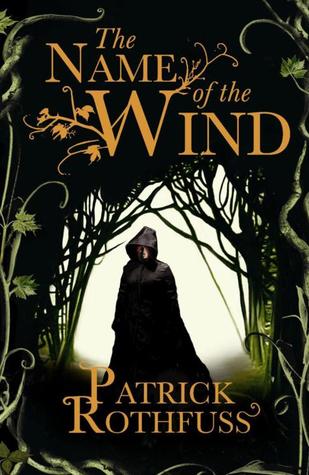
- The Name of the Wind by Patrick Rothfuss – because it’s so brilliant. I really need to reread it. I really need to reread The Wise Man’s Fear as well!! Just such great writing it should be read and reread and then some more.
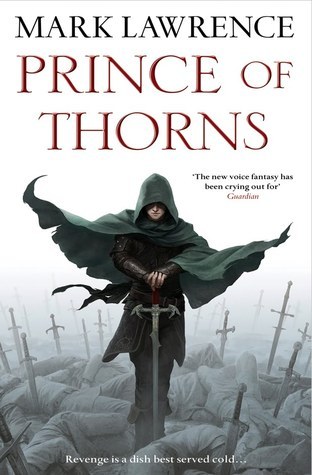
- The Broken Empire series by Mark Lawrence- I would love to reread the first three Jorg books. They’re so clever I would love to go back – especially as I practically raced to the end of each instalment!
- City of Stairs by Robert Bennett – such fantastic world building, plot, characters – in fact all round brilliance! I would like to read this just to savour it a little.
- Rebecca by Daphne Du Maurier – I have already read this 2 or 3 times – one more time couldn’t hurt now could it!
- Gone With the Wind by Margaret Mitchell – this was one of my teenage girl books – I would love to figure out how I feel about it now!
- The Secret History by Donna Tartt – I loved this book when I first read it and I’m just curious to see whether I’d still feel the same.
- Neverwhere by Neil Gaiman – this was my first Gaiman book. I would like to reread and try to capture that lovely happy feeling when you’re so satisfied with a book and realise you’ve found yourself a new favourite author.
- All of Scott Lynch’s books – just because JEAN TANNEN! That is all. Don’t bother to judge me – I have no shame whatsoever. Lalalalala…




To rate or not to rate – that is the question! (Is the pen mightier than the sword????)
My blog consists mainly of book reviews with a spattering of shorter posts usually made up of lists which aim to highlight books that I really like and the occasional movie review or just plain rant about life in general or some such other random post like holiday summaries.
One of my big questions is the whole ‘rating’ issue.
Basically, I find it difficult to rate a book. When I first started blogging I would rate a book using the system A through to E which is clearly the same as the 1-5 star rating. Then, after some time I looked back at my reviews and realised there was no sound basis for the ratings I was giving a book! More than anything the ratings were probably based on my emotions or feelings at the time. I also admit that I would look at my ratings and think how could I have rated book ‘x’ over book ‘y’! So, I basically disbanded the rating system on my blog because I obviously wasn’t terribly good at it! I decided that the tone of my review should be enough. I review a book – If I don’t like it I will probably say something along the lines of ‘this wasn’t for me’ if it’s a book I adore I will rave – A LOT! Or, maybe, I’ll have quite a few criticisms. However, the rub here is that I really enjoy reading a review that has a rating system! I hope that doesn’t make me a hypocrite! – And, I admit, that a rating system is less time consuming – you can just cut to the chase after all – and that’s the other problem with not giving a rating. So, for example, if I just give a fairly mediocre review of a book – in other words there are not words like ‘love’, ‘adore’, ‘you must read this’, ‘why are you still here? Go and get this book’, etc, scattered profusely throughout, but just give a brief summary saying: ‘blah happens’, blah are the characters’, etc, – then I will get comments saying ‘I really want to read this’. Now, should I then feel bad about this? Am I not being obvious enough? People may then go and read this book even though I personally only found it mediocre. I outlined the book and give my criticisms but because I didn’t give a star rating people haven’t maybe read between the lines? Should they even need to read between the lines? This makes me feel unnecessarily guilty to be honest! Although on the other side of the coin if I’m giving a summary of a book without saying that “i loved it’ and somebody still wants to read it – then surely that’s their choice?
The other problem for me with ratings is this. If I see a rating for a book that is a ‘3’ or a ‘C’ or under – then I’ll probably not want to read it – particularly if it’s from a blogger that I trust the opinion of. Now, I don’t mean that critically, and I certainly don’t want to put pressure on other people or intend to make them feel bad about how they rate a book!, But I read a lot of books and yetI still have big stacks of books that I want to read -all competing for time. If I see a few mediocre readings then basically I don’t want to spend my time reading that book – it’s simple really, time is precious! It kind of makes me feel like anything below a 4 is a ‘don’t read’! Is that wrong – no, not really, we all go on Goodreads and Amazon, for example, and if a book is consistently getting low star reviews then we basically trust those ratings. That could be wrong. I could miss a lot of good books that way. Even with the bloggers that I’ve been following ‘forever’ and we usually strongly agree – we don’t always like the same books after all. So, if I just discount 3* reviews I could be missing something really good for me. To be fair, if it’s a book I’m determined to read – then I’m still going to read it! But, a low star rating can be off putting nonetheless.
Perhaps I should try rating again? Although I’m not sure that I’m totally confident with my ability to do so and so probably won’t – part of me thinks it would be easier with a 1-10 review system. Let’s face it, how often do you find yourself wanting to give a half star or half point which with ten points you could do?
It’s tricky!
Plus, do you find yourself strangely intrigued by the negative reviews? I almost like to read the negative reviews of a book I’ve enjoyed – just so that I can counter argue why I like them or feel outraged!! But, I have noticed, although maybe wrongly, that the particularly snarky reviews and low scorers are very popular! And, I can say from experience, that one of the few times that I gave a, for me, fairly low and sarcastic review of a book it seemed to attract more attention than otherwise! Basically, it’s not really my style though.
So, to rate, or, not to rate! That is the question???
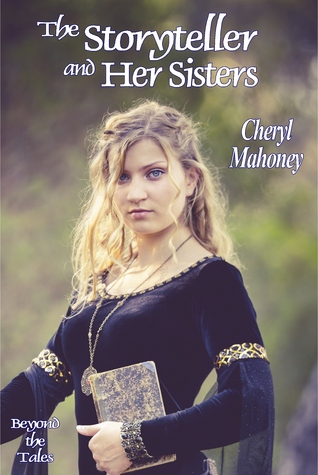
The Story behind The Storyteller and Her Sisters by Cheryl Mahoney
Today I’m very pleased to welcome Cheryl Mahoney to my blog. I recently read The Storyteller and Her Sisters which is a retelling of the Twelve Dancing Princesses (my review here). Cheryl has a lovely story telling voice and a great sense of humour so of course I was really pleased that she was prepared to write a piece for my blog!! Thanks Cheryl. This is a great piece that shares with us the inspiration behind the Storyteller. I hope you all enjoy this – I certainly did.
The Idea Behind The Storyteller and Her Sisters
I’ve found that one of the most frequent questions I get as a writer is “where do you get your ideas?” Since I write fairy tale retellings for my current series, part of my idea usually comes from the Brothers Grimm! I find the key question in retelling fairy tales is, “what doesn’t make sense?” And when you read the originals (or even watch the Disney movies!) there’s plenty that doesn’t make sense—like why Cinderella’s prince is searching for her by shoe size, instead of asking for her by name. From that point, I either point up the absurdity for humor, or start to explore a story that will explain those parts that don’t add up.
My most recent book, The Storyteller and Her Sisters, is based on “The Twelve Dancing Princesses” (or, “The Shoes That Were Danced to Pieces”). This was a fairy tale I got attached to later on in life—I don’t remember noticing it particularly until about five years ago. Then there seemed to be an explosion of retellings, some I found by chance and some I started seeking out.
The original story is about twelve princesses who are mysteriously wearing out their dancing slippers every night, even though they’re locked in their bedroom. Their father sends out a call for champions to come and solve the mystery. Eventually we learn that the princesses are using a trapdoor in their bedroom to pass through a magical forest, cross a lake, and enter a castle where they’re dancing with twelve princes.
Every retelling I’ve been able to find shares some common features—the king is well-meaning, and the princes are monsters carrying off the princesses. But then I was rereading the original Grimm story and I got absolutely stuck on one line: “each prince danced with the princess he loved best.”
I started reading the story again, and for the first time it dawned on me that Grimm never says the princes are monsters, nor is there any indication they’re harming the princesses or anyone else. But there is a king in here who’s locking his daughters in their bedroom every night and, just by the way, is also chopping heads off of unsuccessful champions! So I ask you: who’s really the villain in the story?
At that point I had my idea about doing a twist compared to other retellings, with sympathetic princes and a villainous king. There was still a fundamental “why is it happening this way?” question to address—namely, if the princesses aren’t forced to go dancing, why are they doing it? I’m always in favor of stories that give heroines more power and choice than in the original fairy tales, so I knew I wanted an answer to that question that made my princesses active participants in the story and not helpless victims. So I came up with an answer that does involve a curse, but it isn’t the princesses who are under it.
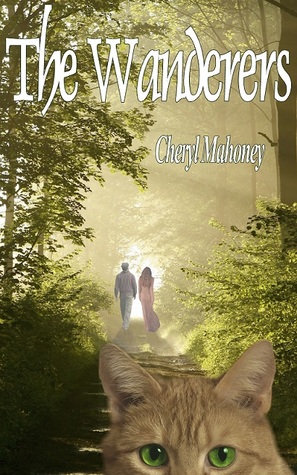
At the time I was first thinking of all of this, I was working on my first published novel, The Wanderers, and so I turned this idea into a chapter of that book. It ended up the longest chapter, and the one most consistently cited as a favorite! I still felt like there was more to the story…so for National Novel Writing Month in 2012, I wrote 50,000 words about my dancing princesses—and another 26,000 in December to finish a first draft. A couple of years and several revised drafts later, I published my particular twist on “The Shoes That Were Danced to Pieces.” But the idea all started with the line, “each prince danced with the princess he loved best,” and a lot of questions about the parts that just didn’t make sense.
Cheryl Mahoney is a book blogger at Tales of the Marvelous, and the author of two books based on fairy tales. The Wanderers, published in 2013, follows the journeys of a wandering adventurer, a talking cat and a witch’s daughter. Her new novel, The Storyteller and Her Sisters, retells “The Shoes That Were Danced to Pieces,” with twelve trapped princesses who decided to take control of their story.