A Local Habitation (October Daye #2) by Seanan McGuire, readalong week No.1
 5 March 2016
Filed under Book Reviews
Tags: A Local Habitation, October Daye, Readalong week 2, Seanan McGuire

 Today is week one of our readalong of A Local Habitation (No.2 October Daye by Seanan McGuire) arranged by Lisa from Over the Effing Rainbow. I read the first book as part of a readalong at the start of the year and thought it got off to a good start but so far book No.2 is totally kicking arse!
The schedule is as follows, It’s not too late to join in so if you’re looking for a great new UF series this could be the one for you.
Week 1: Saturday 5th March, Chapters 1-8 hosted by Over The Effing Rainbow
Week 2: Saturday 12th March, Chapters 9-16 – hosted by Lynn’s Book Blog (me!)
Week 3: Saturday 19th March, Chapters 17-25 – hosted by Books By Proxy
Week 4: Saturday 26th March, Chapters 26-end – hosted by The Bibliosanctum
All are welcome to join in and there’s a discussion page over on Goodreads if that makes it easier to join. Without further ado here are the questions and answers with a customary word of warning that spoilers will be lurking below:
1. Some familiar faces are back for book 2 (hi Tybalt!), but we don’t waste much time getting to meet some new people, most notably Sylvester Torquill’s niece, January, who is … less than upfront with Toby at first meeting. What do you think of January so far?
Firstly – yes, hello Tybalt!! Woohoo those opening scenes. Oh yes!
Anyway.
Well, I guess so far I’d say she comes across as a little inexperienced – or maybe it’s just that she’s trying to stand on her own two feet and too proud to ask for help ((or maybe she’s asking for help but not getting through?). Not sure really. She is definitely not playing with a straight bat when she first meets Toby and I’m not sure why but I think that given the nature of some of the conversations so far (where she think’s she’s been calling Sylvester and vice versa) I think something is rotten in Denmark and maybe it’s something that’s outside her control.
2. Another new face is April, who’s got a rather unique back story according to Alex. What do you make of her so far, and what do you think of the merging of magic and technology that seems set to be the underlying theme in this book?
I quite like the idea of merging magic and technology but I’m not sure I completely believe it yet as it doesn’t seem to usually mix with the fae does it as they always come across as almost medieval somehow? The story with Alex – well, that was a sad story wasn’t it. I can’t help wondering about her being the only one to escape. Is she just terribly unique and lucky and managed to escape against all the odds whilst all the other of her kind died, or is she slightly smarter and managed to escape but is now basically fuming. Come on. She would be livid wouldn’t she – or maybe I’m looking for potential suspects!!! And, she’s all mixed up in the IT – the messenger no less, and nobody’s telephone calls are getting through to each other *waggles eyebrows in a most unflattering way*!!!!! I’m such an over thinker, I know!
3. Do any of the rest of the new faces stand out to you here? If so, who and why?
I would love to know what’s going on with Alex and Terrie (might have got that name wrong). They both seem so appealing don’t they? Now, don’t get me wrong, they both could be very appealing or maybe they’re like using some sort of glamour – okay, I’m over thinking but this is the fae.
4. We get some explanation of the political situation where Tamed Lightning is concerned, and by the end of this section we’ve got a body on the ground at ALH Computing… Got any initial thoughts/suspicions/things you still want to know.
I want to know EVERYTHING. And, I’ll tell you why – because, I have absolutely no idea yet about what’s going on here in Tamed Lightning – but *and shakes finger knowingly* something is definitely going on!
That’s it for me this week. This got off to a great start – Tybalt from almost the get go!!
Speak by Louisa Hall
 Speak by Louisa Hall is a very unusual book. I admit that my curiosity was piqued by the cover and I wasn’t really sure what to expect when I picked it up. As it is I found this a totally fascinating and thought provoking read. It certainly isn’t an action book and I’ll just make that perfectly clear from the outset but in spite of the lack of any action this was a compelling read that drew me in.
This is a combination of five stories from different time periods that all interconnect. I’ve heard comparisons to Cloud Atlas and whilst I can see where those comparisons are coming from this is a story that stands on it’s own two feet. Each story is told in a certain style, so we have a diary, letters, court transcripts, a memoir and also direct communication to us through one of the characters.
The main threads are told as follows:
We follow a young woman called Mary whose family take the decision to uproot and relocate to America during the 1660s. Mary’s tale is told in the form of a diary. It’s a somewhat sad tale but told in a fascinating voice and a style that I really enjoyed. I would have happily read more from Mary to be honest but that’s not really the nature of the book.
We have a series of letters from Alan Turing to the mother of his best friend at school. I think we’re probably all familiar with the story of Turing. He was one of those characters who suffered in terms of being ‘different’ – not just in terms of his sexuality but also in terms of his awkwardness and inability to connect well with others. In both respects he seems to have been endlessly persecuted and again I found this a very sad story to read but, again, totally captivating.
The Dettmans, Ruth and Karl. There story seems to be told in the form of letters to each other that were never sent. The two of them share a history of survival at the hands of the Nazis and this is what seems to have brought them together. Karl is now a computer scientist involved in the creation of one of the earliest AI computers. A programme that will eventually create a wedge between the two.
Stephen Chinn is writing his memoirs from prison. Accused of creating harmful babybots he is recalling his own tale. Chinn also struggles to form friendships and relationships. You could be forgiven for calling him something of a nerd and he seems to have spent his early years with a lack of friends. In fact his own social difficulties are the driving force behind an early programme that he established to help people meet and date and that proved incredibly successful. From this it goes on to tell his story, of how he met somebody and finally started a family of his own. Chinn is something of an obsessive character however and when he starts working on his babybots he pushes his family away.
Finally we have an exchange of online chat between Gaby (one of the victims from the babybots) and Mary3 – an AI software programme. Basically, the babybots were created by Chinn to give his daughter a friend. Lifelike robots that become addictive to the children they are given to and that cause severe trauma and withdrawal to them when removed. Gaby has experienced an almost complete breakdown, she is no longer able to speak or move and has in fact completely withdrawn from the world around her as she experiences such overwhelming sadness over the withdrawal of her friend Eva.
The main focus of each of these tales is communication. And there is a thread that they all share. I won’t elaborate on that here as I think that part of my enjoyment of the story was learning how they were all connected. Suffice to say that through communication and the development of AI programmes all their stories eventually touch.
I really enjoyed this. It’s fairly light on sci fi – to me it’s more of a look at the way people communicate, the difficulties they have and the misunderstandings that can so easily arise and magnify. It’s really interesting to look at the relationships from the story, both the human ones and the ones where AI were involved and to actually compare the two.
I found this very thought provoking in fact I’m still thinking about all the different ramifications as I write this review. As I said at the start, this is not an ‘all guns blazing’ type of novel. It’s an exploration into communication and a look at artificial intelligence. It certainly gives you pause for thought at the way our communication has and still is changing.
I really enjoyed this, in fact much more than I expected to. It’s only a fairly short read and I found myself gripped by the individual stories and the way they all came together.
I received a copy of this courtesy of the publisher through Netgalley for which my thanks. The above is my own opinion.
This review first appeared on The Speculative Herald.
The end is upon us! #SPFBO
It’s difficult to believe but the 12 month period allotted to the SPFBO has finally come to a conclusion. I can’t believe how quickly the time has flown. The brainchild of Mark Lawrence the SPFBO brought together ten bloggers and over 250 different books/authors. I’ve enjoyed this event – it was tough I admit, particularly whittling down over 25 books to just one entry for the first round! And, I confess, that I find it difficult to rate books. But all is now complete and we have an overall winner which is great.
I would love to say a huge thank you to all the authors who submitted their books for such scrutiny and also to Mark Lawrence for pulling this all together.
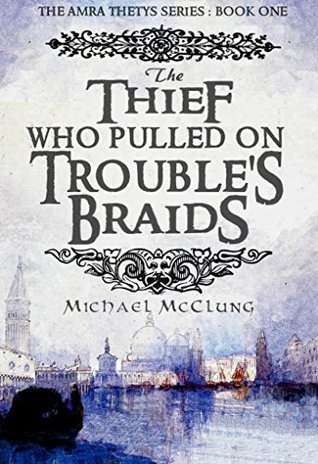
The overall winner was The Thief Who Pulled on Trouble’s Braids by Michael McClung – congratulations Michael, a very enjoyable read and a series that I will definitely continue to read 😀
Second and Third places were: Ben Galley’s Blood Rush and The Weight of a Crown by Tavish Kaeden.


The Weight of a Crown was the book I put forward from round one and Blood Rush was my final choice for favourite book overall. The scores make for interesting reading and for a full summary please check out this page here. The other bloggers who took part were:
- Bookworm Blues
- Elitist Book Reviews
- Fantasy Faction
- Fantasy Book Critic
- The Fictional Hangout
- Beauty in Ruins
- Bibliotropic
- The Speculative Book Review
- Fantasy Book Review
It was great reading all their thoughts and reviews as the event progressed. What I found particularly interesting was how we varied so much in our opinions – going from a 4* rating for example to a 8.5* rating for one particular book. I think this demonstrates perfectly how different we all really are and so whilst one person might not love your book the next person might do.
Anyway, that’s it for me folks with just a final round of applause for all 10 finalists and a huge thanks for all the authors who contributed work.
Waiting on Wednesday: Warrior Witch (The Malediction Trilogy #3) by Danielle L Jensen
2 March 2016
Filed under Book Reviews
Tags: Breaking the Spine, Danielle L Jensen, The Malediction Trilogy, Waiting on Wednesday, Warrior Witch
 “Waiting On Wednesday” is a weekly meme hosted by Breaking the Spine. Every Wednesday we get to highlight a book that we’re really looking forward to. This week I’m featuring Danielle L Jensen’s Warrior Witch, the third book in the Malediction Trilogy (due May 2016):
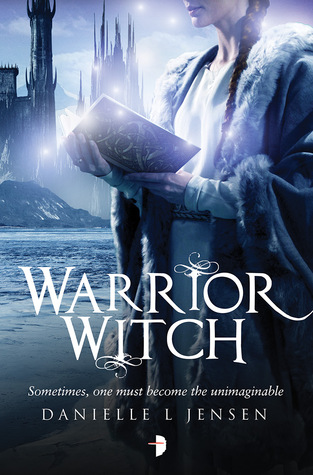 The thrilling conclusion to the breakout Malediction Trilogy by Goodreads Choice finalist Danielle L. Jensen.
Cécile and Tristan have accomplished the impossible, but their greatest challenge remains: defeating the evil they have unleashed upon the world.
As they scramble for a way to protect the people of the Isle and liberate the trolls from their tyrant king, Cécile and Tristan must battle those who’d see them dead. To win, they will risk everything. And everyone.
But it might not be enough. Both Cécile and Tristan have debts, and they will be forced to pay them at a cost far greater than they had ever imagined.
‘I am fire, I am death’
1 March 2016
Filed under Book Reviews
Tags: Dragons, The Broke and the Bookish, Top Ten Tuesday

Every Tuesday over at the The Broke and Bookish we all get to look at a particular topic for discussion and use various (or more to the point ten) examples to demonstrate that particular topic. The topic this week is:
‘Ten Books To Read If You Are In The Mood For X’
Dragons
- The Hobbit by JRRTolkien – surely the most famous dragon (for me anyways!)
- Game of Thrones by JRRMartin – three dragons no less!
- The Copper Promise series by Jen Williams. A most excellent series with dragons and wyverns
- The Dragon Engine by Andy Remic
- A Natural History of Dragons by Marie Brennan
- Owl and the Japanese Circus – by Kristi Charish (a dragon shapeshifter)
- The Invisible Library by Genevieve Cogman (another dragon shapeshifter in this series)
- Harry Potter by J K Rowling – okay, dragons aren’t the main focus here but they are included!
- The Riftwar books by Raymond Feist
- Dragon Hunter by Marc Turner (I haven’t read this one yet – to be reviewed later this month but check out the great cover):


