Paws for Thought > Book Tag
 15 October 2022
Filed under Book Reviews
Tags: Book Tags, Books and dogs, Paws for Thought


Today I thought i’d have a go at something light and fun. A book tag that I came up with that combines my love of dogs and my love of books. If you fancy taking part please tag me so I can see what books you come up with. Let’s go:
<>
I’m going to start and conclude with the puppy and old faithful:

The puppy, illegally cute, will eventually grow into it’s paws and ears, will chew your shoes, possibly your clothes and the table legs and demand all your attention before curling up to sleep exhausted.
** The most recent book that you read and loved **
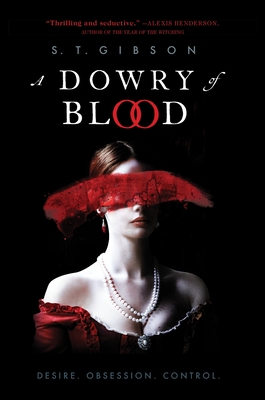
Well, I’ve been on something of a reading high just recently (long may this continue) but, the actual last book that I gave five stars to was A Dowry of Blood by ST Gibson. Dark romance, broodingly gothic and a tale of obsession and control:
<>

The Retriever, intelligent, hard working hunters with a love of life believed to have originated in Scotland.
** A book that was carefully planned, clearly well researched and was intelligent and thought provoking **
This is another very recent read that I’m really happy to be able to cast the light on here. Babel: Or the Necessity of Violence: An Arcane History of the Oxford Translators’ Revolution by RF Kuang. An ode to words:

<>

Poodle, the aristocrat of the canine world. A proud and elegant athlete.
** A book with a beautiful cover **
Ahh, so many possibilities… I had to cheat and choose more than one. (This was probably the most difficult prompt for me because I suffer from cover love so could have gone totally giddy and included MANY, MANY MANY, more covers, as it is I exercised remarkable constraint:


<>

The German Shepherd, an all purpose working dog, loyal and courageous.
** A book that gave you a strong case of the heebie jeebies. You needed all your courage to pick this one up **
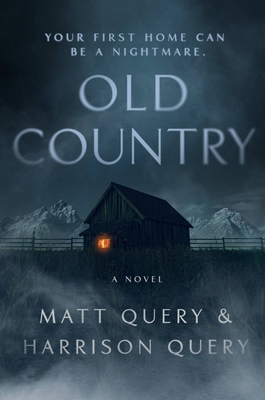
Old Country by Matt Query and Harrison Query – there’s some very creepy scenes in this one so beware.
<>
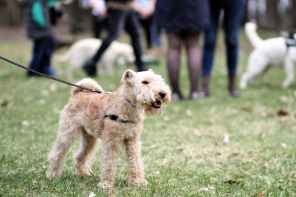
Lakeland terrier, a ‘big dog in a small package’
** A book with great characters **
The Empire’s Ruin by Brian Staveley – I love this book and can’t wait to read the next in series. I love Gwenna so much.

<>
 Rottweiler, descendent of the Roman mastiffs, playful and protective.
** A book based on ancient history **
I simply have to give a shout out to The Wolf Den and the House With the Golden Door by Elodie Harper because they’re just so good. This is a series that takes us to Pompeii and provides us with a glimpse into the lives of slaves and prostitutes. I am giddy with anticipation for what comes next.


<>

Greyhound, gentle and independent, a dog that embodies the saying ‘form follows function’. Bred for speed.
** A book that was fast paced and kept you racing to the end **
Black Tide by KC Jones. This was such a great book to read. The writing was snappy and the tension was cranked up and it had a healthy dose of totally ‘out there’ cosmic horror. This is a book that I would love to see adapted – it could be totally wicked, tense and scary:

<>

Dachshund, these dogs are not necessarily built for speed but they are relentlessly persistent. Quite often known as ‘the sausage dog’.
** A book that made you hungry – this is a book that you need to stock up on treats before you crack it open**
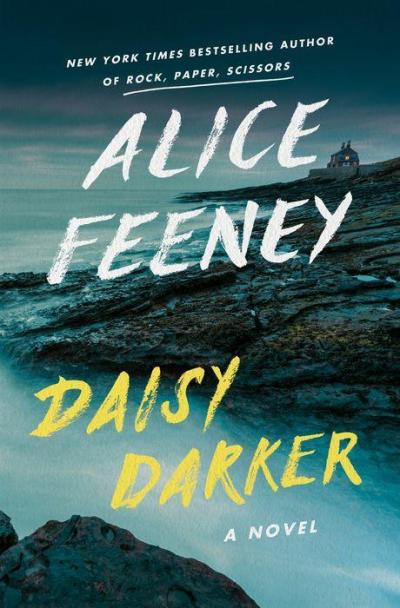
This is perhaps an unusual choice but I’m going to say Daisy Darker by Alice Feeney. It has some of the most unusual food served at a party that I’ve ever heard of. I’m not sure whether I’d love the food or not but I’m certainly intrigued. And, this is a great read. Feeney starts out with a captivating hook, she then lets us run on the line enjoying the freedom to explore the remote setting and the histrionics of the Darker family before reeling us in to a climatic and dramatic grand finale. An absolute must read imo.
<>

The Mixed breed or “Heinz 57” as its sometimes affectionately known, this is a dog of indeterminate breed. Generally speaking such dogs are believed to live longer and suffer less hereditary diseases and will you just look at that face. I have a serious case of ‘cute aggression’ coming on..
** This is a book with a bit of everything going on. Could be lots of different elements/POVs or a collection of stories **
This is a book that I recently read and will be reviewing soon. It’s one of those books that succeeds in blending elements such as science fiction, fantasy, romance and adventure. Watch this space for my thoughts very soon. A Gamble Of Gods (The Order Of The Dragon, #1) by Mitriel Faywood.

<>

The French Bulldog, enjoying great popularity at the moment. Playful and adorable and loved by City dwellers who have less space.
** A book that is irresistibly cute **
I’m using this tag as much as possible to highlight my most uptodate reads and also included in that is the books I’ve been reading for the Self Published Fantasy Blog Off Competition (for more info check out Mark Lawrence’s post here). One of my Semi Finalists this year is Miss Percy’s Pocket Guide to the Care and Feeding of British Dragons by Quenby Olson. This book is positively delicious – it also fits into the prompt above about needing treats on hand when you’re reading – because cake is mentioned an almost indecent number of times. This book is so good. When I was reading I felt transported back to an almost Austen-ish world with bonnets and etiquette. And just look at the cute dragon. Also the fantasy elements are included in such a clever way that even if you’re not usually a fantasy reader I think you’d be hard pressed not to be very pleasantly surprised.

<>

The Portuguese Podengo, alert and independent. A breed of hunting dog believed to have descended from dogs brought to Portugal by Phoenician merchants.
** A book that is a standalone **
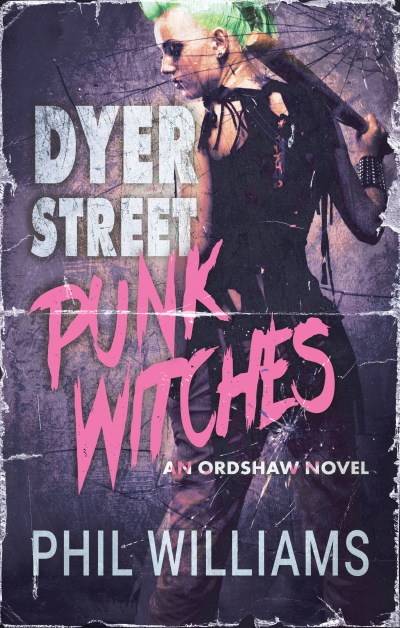
Dyer Street Punk Witches (Ordshaw #7) by Phil Williams.So you’re probably scratching your head and wondering why I’ve included this book under my standalone prompt? Well, although this is set in the Ordshaw world I can confidently say that you can read this book as a standalone. I only mention this because I quite often feel daunted when I see that I’m already so far behind in a very established series and to be honest it puts me off picking it up – which sounds crazy but it simply feels like such a huge commitment to catch up. This was actually my favourite of the Ordshaw stories with new characters and an intriguing storyline. Plus a fantastic kickass central pov and a banging cover. Give it a shot, you might (more than definitely will) fancy returning to some of the earlier books as a result.
<>
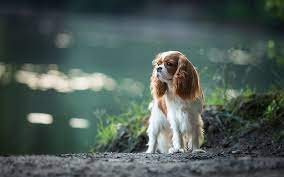
The Cavalier King Charles Spaniel, the nobility of Dogdom with a silky coat, mild temper and graceful athleticism.
** A book with Kings and Queens or something historic **
So, back to my SPFBO endeavours. For this prompt I’m using my other Semi Finalist. The Blood of Crows by Alex C Pierce. I had such a lot of fun with this one and the story is intriguing and compelling. Firstly, I’m a sucker for heists, secondly I love characters that manage to insert a little humour even though they’re in the middle of dire circumstances, thirdly I loved the magic and the way it feeds into the plot so easily and fourthly, there is more yet to come and it promises something I didn’t expect. I’m thinking of the ending and obviously I can’t elaborate. You’ll simply have to read the book. I’m watching you AC Pierce!

<>
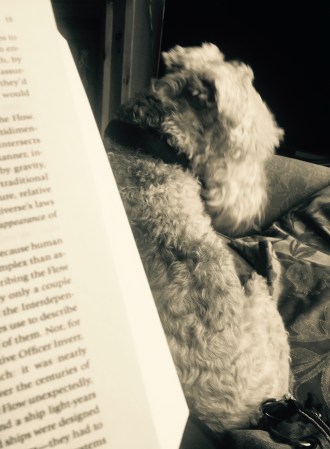
Finally. Old faithful. This is the dog that has been your steadfast companion over the years. Lies with it’s head on your foot so that it knows when you move, scents you out no matter where you are and waits patiently. Is the first to greet you in the morning and the last at night and is always happy to see you.
** A book that you’ve read many times, you could pick this book up and just let the pages fall open to where they may and dive right in **
I have a number of books that I’ve read a few times but I think the one I used to pick up most frequently was Rebecca by Daphne DuMaurier. Having said that I realise I haven’t picked this up in quite some time so perhaps a reread is in order. I love this author’s work and along with Rebecca have no hesitation in recommending My Cousin Rachel and Jamaica Inn. There are many more but those two always stood out for me.

If you enjoyed these prompts please feel free to take part. I’m not tagging anyone but hope you’ll join in and would love to see your books. Sorry if you don’t see your favourite pooch here – there are so many breeds and so I had to narrow it down somehow.
Also, for the cat lovers out there (of which I am also one), I have a lovely idea for a cat tag which I’m going to pull together very soon.
Friday Face Off : Witches/Warlocks

Here we are again with the Friday Face Off meme created by Books by Proxy . This is a great opportunity to feature some of your favourite book covers. The rules are fairly simple each week, following a predetermined theme (list below) choose a book (this doesn’t have to be a book that you’ve read), compare a couple of the different covers available for that particular book and choose your favourite. Future’s themes are listed below – if you have a cover in mind that you’re really wanting to share then feel free to leave a comment about a future suggested theme. I’ve also listed events that take place during the year, that I’m aware of, so you can link up your covers – if you’re aware of any events that you think I should include then give me a shout.
I’ve added themes in below. For information, I’m trying out some new ideas so along with coming up with particular items for book covers I thought we could also look for certain elements contained within the book or that play a large part in the story – this really broadens things out because I have plenty of more ideas with this – I’ve gone for a few of the Tough Travel Themes (so a book with that theme – just choose any book – the theme isn’t necessarily on the cover, then compare covers), also, I’ve thrown in some genres and some colours. Hopefully this will open things out a little and give us some more freedom to come up with new books.
This week’s theme:
Witches/Warlocks
Well, we are definitely in the right season for this weeks theme and I’m so happy to have a book this week that is a very recent read. So recent, in fact, that my review is not yet posted (although it will be soon, and, spoiler alert – it was really good). So, Cackle by Rachel Harrison. Here are the two covers:


My favourite:
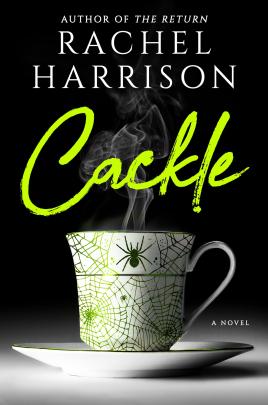
Do you have a favourite. Have you read this book yet – what did you think?
If you’re taking part in this week’s theme feel free to leave your link in the comments below.
If you know of an event that’s coming up let me know and I’ll try and include covers that work for the event itself so that you can link up to the Friday Face Off and, as always, if you wish to submit an idea then leave me a comment – or if you’d like to host a week then simply let me know. Also, I would just mention that it’s very possible that some of these might be repeats from previous FFOs although I have tried to invent more ‘open ended’ prompt that can be interpreted differently and also prompts that relate to emotions. Finally, don’t struggle with any of these, this is meant to be a fun way of highlighting books. If you can’t come up with a book you think fits for a particular week use a freebie – perhaps a recent read for example:
Next Week’s Theme : Tough Travel Tropes – Good vs evil
2022
A Dowry of Blood by ST Gibson
My Five Word TL:DR Review: Sweeping gothic story of abuse

I will say from the outset that I loved this. I was gripped from beginning to end and couldn’t put it down. This is my catnip.
Retelling famous stories from the point of view of side characters, victims or misunderstood characters is popular without a doubt at the moment and I for one am enjoying this trend. Dowry of Blood is no exception. Take the classic vampire story, Dracula, and take a look at him and his life through the eyes of three of his ‘children’. Dracula’s chosen ones.
As the story begins we meet Constanta, rescued from certain death after her village is ransacked and turned into a vampire. Constanta is telling her story, in epistolary format, almost as though she’s speaking to her husband. The style is beautiful and quite captivating.
Constanta is smitten to begin with and the two of them live in their castle until the plague forces them to move to Europe and from then onwards their life seems to be a constantly movable feast. Eventually Dracula takes another bride, manipulating Constanta into agreeing and although the three of them form a bond of sorts there’s always something lacking. At this point Dracula takes one more partner and ultimately this seems to signal the beginning of the end.
I don’t really want to say too much about the story but talk more about what I really enjoyed about it.
Well, firstly, as I mentioned I love the format used to tell the story. Constanta has a lovely narrative voice and it feels like she’s talking straight to us at the same time as confessing to her husband. The writing is lovely and there are some fantastic passages that I wish I’d noted to copy here.*shakes fist at self*
Secondly Stoker’s Dracula is a firm favourite of mine and I confess I enjoy any opportunity to revisit it and to look at it through a different lens was perfect.
Thirdly, gothic. All the gothic. I love the gothic elements ranging from castles resplendently dressed in tapestries to crumbling houses, not to mention a brooding central character. The story quickly takes us through the years. We witness plague, wars, the fall of empires. Only briefly touching on these as our small family are swept from place to place staying just ahead of the chaos or sometimes using that same chaos to feed heartily sowing death in their wake.
On top of this, A Dowry of Blood gave me different vibes whilst I was reading. For example I couldn’t help but be put in mind of Anne Rice at certain points and I think that boils down to the focus here which I don’t think has been touched on with Dracula or any of his retellings before (although I clearly haven’t read everything). With Lestat/Louis, etc we enter the world of ‘making vampires’ and the issues that this inevitably causes, think of Louis and his struggles not to lose his humanity also Claudia and the right or wrong of making a young vampire, not to mention the power struggles between the dynamic and the camaraderie that builds between certain characters. Certain elements of those struggles are apparent in these pages.
Which leads me to the characters here and what for me was the key element to the story which is the manipulative and controlling relationship that Dracula had with his brides. This is a story of abusive relationships, how people develop certain behaviours in order to cope and also about breaking free. In a way you couldn’t probably find a more manipulative and controlling abuser than a vampire – I mean, they take your blood after all and it is rather essential to life! I think over the years we’ve all developed romantic notions of the immortals and forgotten their true nature is that of a predator and we their prey but if you look a little deeper could there be anything more invasive than the mind control that some vampires exercise. In some novels this runs to glamouring or a sort of hypnosis, with Dowry this is less about a perceived superpower and more about Dracula controlling his partners through a variety of means. He offers love for good behaviour and on the opposite side he shows immense anger when his more gentle methods fail. He is emotionally and mentally abusive keeping each character in their place by whatever way seems the most successful. All his partners seem to begin from a point of gratitude but slowly and surely their rose tinted glasses come off. Dracula controls everything. He holds the purse strings and on top of that he is very careful about sharing knowledge so his progeny rely on him for everything. As strange as it may seem this is a hopeful book, a book about breaking bonds and breaking free.
I think this book is around 300 pages in length and it surprises me how much the author manages to fit in. I wouldn’t say the world building is focused on but at the same time I would defend that choice quite strongly as this is set in our world, the history is unchanged and we simply catch a fleeting glimpse of how the vampires move through it.
In conclusion, this is undoubtedly a dark, sexy, romantic, gothic, well told, twisty, retelling of the story of Dracula by one of his brides. I loved the writing and thought Constanta was a wonderful character. An absorbing and hypnotic read. I will definitely read more by this author.
I would also point out that this story contains numerous trigger warnings which the author outlines on Goodreads. So take a look before picking this one up.
I received a copy through Netgalley, courtesy of the publisher, for which my thanks. The above is my own opinion.
My rating 5 of 5 stars
Can’t Wait Wednesday : A House With Good Bones by T Kingfisher
12 October 2022
Filed under Book Reviews
Tags: A House With Good Bones, Can't Wait Wedesday, T Kingfisher, Wishful Endings

“Waiting On Wednesday” is a weekly meme that was originally created by Breaking the Spine. Unfortunately Breaking the Spine are no longer hosting so I’m now linking my posts up to Wishful Endings Can’t Wait Wednesday. Don’t forget to stop over, link up and check out what books everyone else is waiting for. If you want to take part, basically, every Wednesday, we highlight a book that we’re really looking forward to.
This week my book is: A House With Good Bones by T Kingfisher – I was saying today how this author has jumped immediately onto my must read list after reading Nettle & Bone – and then this books pops up – it’s like a sign from the God of Books (GoB). If the GoB wants me to read this then it would be rude not to really:
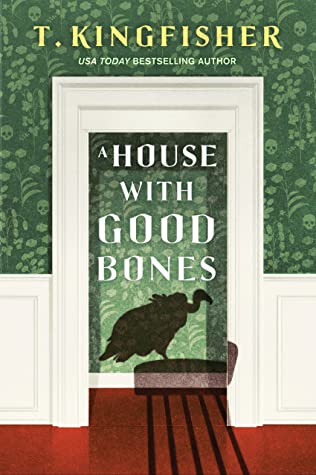
Sam Montgomery is worried about her mother. She seems anxious, jumpy, and she’s begun making mystifying changes to the family home on Lammergeier Lane. Sam figures it has something to do with her mother’s relationship to Sam’s late, unlamented grandmother.
She’s not wrong.
As vultures gather around the house and frightful family secrets are unearthed under the rosebushes, Sam struggles to unravel the truth about the house on Lammergeier Lane before it consumes her and everyone else who stands in its way…
Expected publication March 2023
Babel: Or the Necessity of Violence: An Arcane History of the Oxford Translators’ Revolution by RF Kuang
11 October 2022
Filed under Book Reviews
Tags: Babel: Or the Necessity of Violence: An Arcane History of the Oxford Translators’ Revolution, RF Kuang
My Five Word TL:DR Review : Fascinating, Mesmerising, Clever, Shocking, Beautiful

Babel is one of those books that I’ve inexplicably struggled to find the words for with this review, so I’m going to start by saying that this book feels like an ode to words, a love letter to literature if you will, and I loved reading/listening to it. On a wider note there is plenty for discussion here, colonialism, racism, the power of language, dark academia, elitism all wrapped up in a story narrated by a rather unassuming, shy and intelligent young man known as Robin Swift.
As the story begins we meet Robin (though this wasn’t his name at the time but an assumed identity forced upon him for his new life). Robin’s mother dies leaving him an orphan and his care is picked up by an Oxford Professor called Lovell (Loveless might have been more appropriate). Lovell gives Robin a roof over his head, food and clothing and in return Robin is expected to study hard and become a first class student in the field of translations – the aim, to attend Oxford University’s Institute of Translations, known as Babel (the students attending known as Babblers because of their ability with languages). It soon becomes apparent that Robin will receive little (or no) affection from Lovell and if he fails in his endeavours to work hard and learn the threat that he will be returned to China (homeless and alone) is more than implicit. Robin soon discovers that his love of reading is not all about finding heros but is something that has been fostered in him for other purposes. Now, I don’t want to go into any further detail about the plot, I guess, rather than a coming of age story you could call this a rude awakening. It does take Robin a while, but eventually he begins to question who and what he’s working for and whether he can truly deny the harsh truths he discovers.
So, to the setting. Well, we briefly start in Canton, we travel quickly to London where Robin’s transformation to potential Oxford candidate takes place before finally moving to Oxford. I loved the descriptions and can totally understand Robin’s lovel for both London and Oxford and the lifestyle he leads in both places. He soon discovers that as a student at Oxford he is only suffered amongst the wealthy and elite for his language abilities. Abilities that are fundamentally necessary in the use of magic.
In terms of the magic,I would say that this is the only real element that I felt a little unenthusiastic about. I’m not going to go into great detail but basically silver working involves bars of silver that are enchanted and powered by matched terms – basically, this is why there is such a necessity for language students to study words and find their lost meanings. The silver bars can be used for all sorts of applications from keeping a bridge strengthened to powering a machine. On the face of it I must say I like the sound of this very much but in terms of Babel, well, I’m not sure it was absolutely essential to include the use of magic. For me this reads more like historical fiction rather than fantasy – that being said, I loved the exploration of words that the magic system involved, the footnotes looking at origins and meanings and the way these have changed during the course of time. So, definitely more an observation and perhaps one that will interest those readers who shy away a little from fantasy on a more epic scale.
The writing is beautiful and Kuang is a great storyteller. I just love the way she turns a phrase. She has modernised the dialogue which is something I like as it makes the read flow better somehow and, to be clear, that’s not to say that the characters come out with all manner of everyday slang from our current era but they’re not constantly thee’ing and thou’ing or nay’ing or aye’ing. In fact, the author being something of an expert in this field not to mention incredibly well researched, I half expected this to have a more olde worlde style and I admit I breathed a sigh of relief to find that wasn’t the case.
The feel of the story gradually changes, and whilst you’re expecting it to an extent because of the narration style, you soon find yourself in much deeper water and scratching your head about how everything will be resolved. This isn’t grimdark by any standards but with revolution being the key to the piece, in terms of invention and uprising, well, history demonstrates only to well how change is often brought about and the subsequent bloodshed and death that it leaves in its wake. On top of this there is plenty of food for thought here and it’s not wrapped up in soft or comforting terms. Be prepared for harsh truths.
The characters. Well, I wouldn’t say that I became overly attached to anyone other than Robin. He makes friends with fellow students Ramy, Letty, and Victoire and they all have their parts to play here but Robin is the key character for me. He has a great character arc and I found myself worrying about him a good deal of the time. Don’t get me wrong, I didn’t dislike the other characters but they just didn’t feel as well drawn to me, they were there because they were part of Robin’s experience and helped nudge him, sometimes unintentionally, to hone his understanding and guide his future actions.
Overall, I really enjoyed Babel. I listened to the audio version which was excellent and I must say I found the footnotes much better in this format. I would describe this as historical fiction blended with light magical realism. The writing and attention to detail are stunning and I really look forward to seeing what this author comes up with next.
I received a copy through Netgalley, courtesy of the publisher, for which my thanks. The above is my own opinion.
My rating 4.5 of 5 stars


